
Views: 0 Author: Site Editor Publish Time: 2026-06-17 Origin: Site


Upgrading blister packaging materials is no longer a simple procurement choice. It represents a strategic business decision directly impacting margins, environmental compliance, and machine compatibility. Manufacturers must balance legacy reliability against modern ecological demands. Historically, PVC Blister Packaging dominated the industry due to its formability and efficiency. Today, global sustainability mandates and circular economy initiatives demand rapid change. Companies face mounting pressure to transition to eco-friendly alternatives without compromising product integrity.
This article provides an objective, engineering-focused comparison of these two primary materials. We will evaluate performance, scalability, and machinery requirements. You will learn how to navigate regulatory constraints and select the ideal packaging strategy for your specific applications. By understanding material behaviors, you can optimize your production lines for the future.
Cost vs. Capability: PVC offers lower upfront raw material costs and requires less energy to thermoform, while PET provides superior clarity and environmental compliance.
Equipment Compatibility: Switching from PVC to PET often necessitates machine adjustments (heating temperatures, cutting tool sharpness) to prevent structural failures or production bottlenecks.
Regulatory Pressures: PET aligns with strict global ESG requirements and recycling infrastructure, whereas PVC faces increasing regulatory scrutiny and potential phase-outs in certain regional markets.
Application Rules: PVC remains dominant in rigid pharmaceutical applications requiring specific barrier coatings, while PET is the preferred choice for retail, electronics, and consumer goods.
Understanding the fundamental chemistry of your packaging is crucial. Chemical structure dictates how materials behave under heat, stress, and environmental exposure. It also determines how well they protect sensitive contents.
Polyvinyl Chloride features a unique, amorphous molecular structure. It delivers exceptional thermoforming flexibility combined with structural rigidity. Manufacturers rely on it because it molds easily into complex cavity shapes.
A major advantage of PVC lies in its barrier properties. Its baseline moisture vapor transmission rate (MVTR) and oxygen transmission rate (OTR) perform reliably well for many standard applications. Furthermore, you can enhance it easily. Manufacturers often apply barrier coatings like PVDC (Polyvinylidene Chloride). These laminations drastically reduce moisture and oxygen ingress. This capability makes coated PVC vital for highly sensitive pharmaceutical drugs.
Polyethylene Terephthalate possesses a distinct semi-crystalline structure. It boasts high tensile strength and superior optical clarity. PET Blister Packaging makes products look premium on retail shelves. It resists impact better than many alternatives.
When you compare baseline barrier properties, standard PET generally offers comparable or slightly lower moisture barriers than specialized PVC. It protects most consumer goods perfectly. However, for extreme moisture protection, you might need specialized variants like PETG or APET. PET excels in flex-cracking resistance. It endures rough logistics and transport handling without fracturing, keeping product seals intact.
Here is a simplified comparison chart detailing baseline material properties:
Property | Standard PVC | Standard PET | Coated PVC (PVDC) |
|---|---|---|---|
Optical Clarity | Good | Excellent | Moderate to Good |
Moisture Barrier (MVTR) | Moderate | Moderate | Exceptional |
Impact Resistance | Moderate | High | Moderate |
Flex-Cracking Resistance | Low to Moderate | High | Low to Moderate |
Switching packaging substrates directly impacts your shop floor. Operators must adjust settings to handle different thermal and mechanical behaviors. Ignoring these differences leads to production bottlenecks and high scrap rates.
Every material has an optimal temperature processing window. PVC has a notably wide, forgiving thermoforming window. Operators can heat it rapidly at lower temperatures. It fills mold cavities effortlessly, minimizing web deformities.
PET requires precise, higher-temperature heating profiles. You must control heat strictly. Improper temperature control causes rapid crystallization. This turns clear plastic into a cloudy, brittle mess. Uneven heating also creates thin, fragile pockets in deep-draw cavities. Operators need advanced zone-heating controls to form PET successfully.
Transitioning existing production lines introduces mechanical risks. PVC acts as a softer material during the cutting phase. PET exhibits extreme toughness. This durability is great for packages but harsh on machinery.
PET accelerates wear and tear on die-cutting tools. Blades dull significantly faster compared to running softer PVC. Dull blades leave rough edges, create plastic dust, and jam automated outfeed systems.
Common Mistake: Running PET using old PVC tooling without adjusting strike pressure.
Best Practice: Upgrade to hardened steel rule dies and schedule frequent blade sharpening.
Implementation Takeaway: We highly recommend a thorough machinery audit. Inspect your heating stations, mold chilling mechanisms, and cutting blades before committing to a material switch.
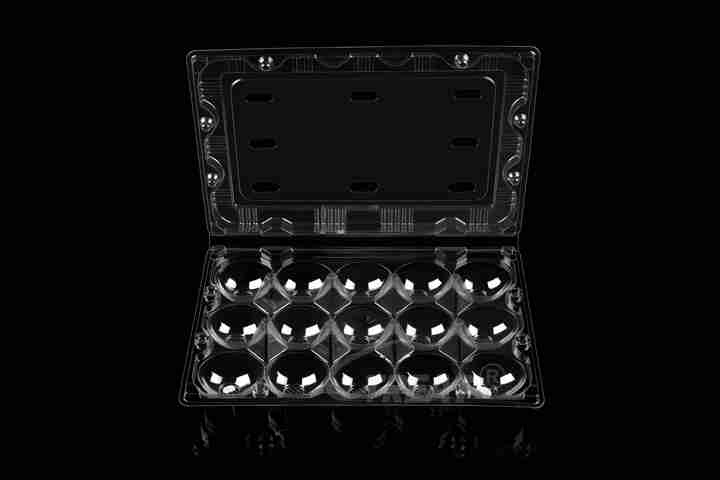
Environmental, Social, and Governance (ESG) frameworks now drive corporate strategy. Packaging engineers must evaluate end-of-life scenarios alongside material costs.
PET enjoys status as a globally accepted, highly recyclable polymer. It fits perfectly into a circular "Waste-to-Value" model. Municipalities easily sort and process Type 1 plastics. Recycled PET finds second lives in apparel, strapping, and new packaging.
Conversely, environmental skepticism surrounds PVC. It contains chlorine. Incinerating it improperly releases toxic byproducts, including dioxins. Most municipal recycling streams reject Type 3 plastics entirely. They contaminate broader recycling batches. Consequently, legacy blister packs usually end up in landfills.
Companies must evaluate raw material price volatility continuously. Historically, buyers found PVC cheaper per metric ton. It provided reliable margins for high-volume manufacturers.
However, the global market landscape is shifting rapidly. Many regions now enforce strict compliance penalties. Markets like the European Union impose Extended Producer Responsibility (EPR) taxes on non-recyclable materials. They implement plastic taxes penalizing PVC usage. These hidden compliance costs narrow the historical price gap. PET often avoids these steep regulatory penalties, making it highly competitive for long-term strategic planning.
No material dominates every sector. Physical constraints, regulatory approvals, and consumer expectations dictate the ideal choice for specific industries.
PVC remains heavily entrenched in pharmaceuticals. It fights back against alternatives and holds firm ground. Why? It boasts decades of proven stability data. Regulatory bodies like the FDA and EMA have extensive pre-approvals on file for it. It integrates flawlessly with aluminum foil lidding, ensuring sterile, child-resistant closures.
Validating new PET-based systems for highly sensitive drugs poses immense challenges. Stability testing takes years. Replacing a validated ALU-PVC cold-form structure requires expensive new clinical stability trials. For life-saving medications requiring extreme moisture protection, coated PVC remains the safest, most practical option.
In retail environments, visual appeal drives sales. Here, PET becomes the default choice. It offers maximum product visibility. Consumers can inspect electronics, cosmetics, or hardware clearly before purchasing. The material provides a higher perceived quality due to its glass-like transparency.
Consumer goods also face intense consumer scrutiny regarding sustainability. Shoppers actively look for the "chasing arrows" recycling symbol. Using PET helps brands meet these consumer demands. Furthermore, its high tear resistance deters retail theft effectively, protecting high-value electronics on display pegs.
Selecting the optimal material requires a structured approach. You must balance engineering needs against market realities. Follow this framework to guide your transition.
Define Regulatory & Market Constraints: Identify where you sell your products. Are you entering regions with incoming PVC bans? Is your product heavily reliant on ESG branding? If you target eco-conscious European markets, transitioning to PET is likely mandatory.
Audit Shelf-Life & Barrier Requirements: Analyze your product's chemical sensitivity. Does it require high-level moisture or oxygen protection? Standard PET cannot provide extreme barriers without expensive laminations. If you package hygroscopic pills, you may need to stick with PVDC-coated options.
Calculate Capital Expenditure and Upgrades: Quantify the required capital expenditure. Upgrading thermoforming lines for precise temperature control costs money. Compare these retrofit costs against long-term EPR tax savings. Forecast your expected plastic tax liabilities over a five-year horizon.
Conduct Pilot Testing: Never switch materials blindly. Run small-batch material qualification runs. Test your seal integrity rigorously. Monitor cutting die longevity during these trials. Validate your blister packs in real-world shipping simulations before full-scale adoption.
Common Mistake: Approving a material based solely on a desk review. Always run physical machine trials to identify unforeseen forming defects.
Neither material is universally "better" in all scenarios. PVC wins decisively on manufacturing ease, low upfront pricing, and pharmaceutical barrier integration. It remains a reliable workhorse for medical applications. PET dominates in sustainability, structural clarity, and future-proofing against regulatory bans. It aligns perfectly with modern circular economy goals.
You must evaluate your specific product requirements carefully. We encourage buyers to consult directly with packaging engineers. Request detailed Material Data Sheets (MDS) for accurate barrier comparisons. Run comprehensive lifecycle analyses to understand true environmental impacts. Finally, schedule pilot thermoforming tests on your specific equipment to ensure a seamless operational transition.
A: Not without adjustments. PET requires much higher, precise heating temperatures. You must also upgrade to sharper, hardened cutting dies. Failing to adjust settings leads to rough edges, cloudy plastic, or machine jamming.
A: Upfront raw material costs for PET are typically higher. However, regulatory taxes on PVC and consumer preference for sustainable packaging can make PET highly cost-effective in the long run.
A: Standard PET has a slightly lower moisture barrier than specialized, coated PVC like PVDC. Pharmaceutical applications requiring absolute high barriers may need advanced PET formulations or remain with proven PVC/Alu-Alu structures.


