
Views: 0 Author: Site Editor Publish Time: 2026-08-03 Origin: Site


Walk into any retail distribution center, and you will see the harsh reality of the fresh produce supply chain. Incorrect packaging ventilation silently destroys profit margins before products ever hit the store shelves. Premature spoilage, severe condensation build-up, and soaring rejection rates plague operations relying on generic packaging solutions.
To combat these losses, agricultural packers must optimize produce clamshell vent holes to actively manage respiration, ethylene gas dispersal, and temperature pull-down. Without precise airflow, trapped moisture feeds aggressive mold growth. Meanwhile, trapped ethylene accelerates unwanted ripening, dramatically reducing the viable commercial window for your commodities.
We built this guide to help procurement managers, growers, and packaging engineers navigate complex engineering tradeoffs. You will discover a technical decision-making framework for evaluating structural limits, matching vent placements to commodity types, and selecting the exact configurations you need to extend shelf life.
Cooling Efficiency: Vent size and placement directly dictate forced-air cooling speeds, impacting pre-cooling energy costs and shelf life.
Moisture Management: Symmetrical and strategically placed vents mitigate condensation without over-exposing produce to external contaminants.
Structural Trade-offs: Increasing the open surface area for airflow requires careful gauge adjustments to prevent the fruit clamshell container from collapsing under pallet weight.
Produce-Specific Calibration: High-respiration items (like berries) require fundamentally different vent patterns than low-respiration or larger commodities.
Poor ventilation generates staggering financial losses across the agricultural supply chain. Shrinkage often spikes when inadequate airflow creates micro-climates inside the packaging. Trapped humidity serves as a breeding ground for Botrytis and other destructive fungi. Furthermore, delayed cooling times force refrigeration systems to work harder. This energy inefficiency strains operational budgets and delays pallet shipments.
Fresh produce remains biologically active long after harvest. Fruits and vegetables continue to breathe, consuming oxygen and releasing carbon dioxide alongside water vapor. We call this process respiration. Many crops also emit ethylene, a potent gaseous hormone triggering rapid senescence and decay. Specific vent designs actively flush these ripening gases out of the immediate package environment. When you match the open surface area to the physiological respiration rate, you prevent internal gas accumulation from reaching toxic levels.
Forced-air cooling remains a critical success metric for buyers managing massive post-harvest volumes. In warehouse pre-cooling phases, massive fans pull chilled air through palletized cartons. Vent hole alignment dictates whether cold air actually penetrates the individual packages or simply bypasses them. Fast temperature pull-down minimizes physiological degradation. If vents restrict this airflow, the core temperature of the palletized fruit remains dangerously high, shortening shelf life by days or even weeks.
Common Mistakes: Buyers often select stock packages based on price rather than cooling performance. Failing to analyze the pressure drop across the vent profile results in uneven cooling. The perimeter chills quickly, while the center of the pallet succumbs to field heat.
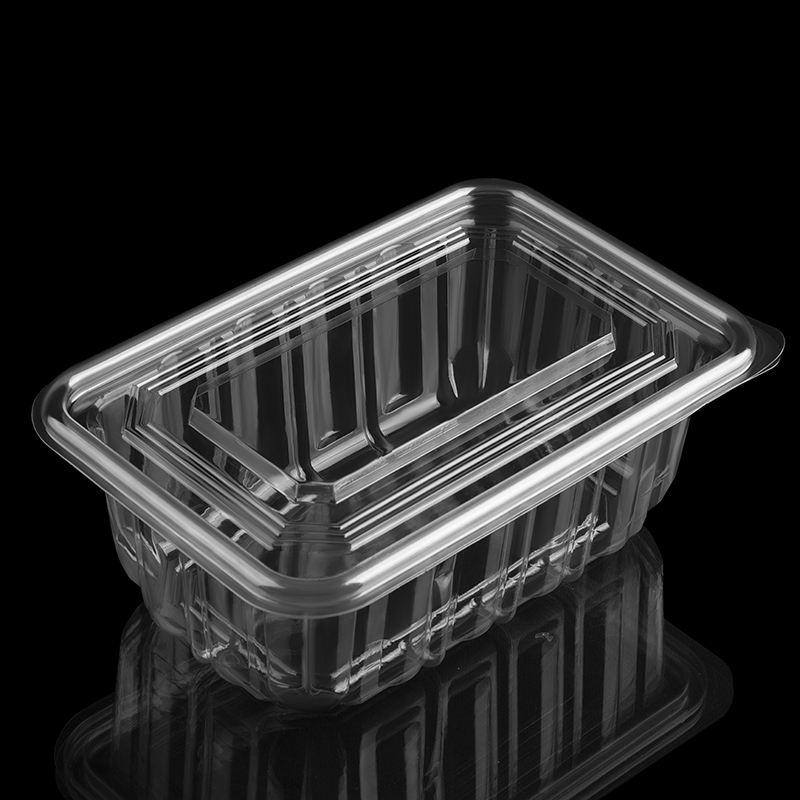
Top and bottom vents excel in vertical airflow scenarios. Retail display cases and consumer refrigerators typically circulate air from the bottom up. Perforations along the lid and base facilitate this natural convective flow. Top vents play a crucial role in managing condensation. They allow evaporated moisture to escape before it forms large water droplets on the inside of the lid, which obscures product visibility and promotes decay.
Side ventilation provides the essential architecture for horizontal forced-air cooling systems. Commercial cold storage and transit trailers rely heavily on horizontal airflow pushing through stacked pallets. Side vents capture this lateral air movement, drawing it across the fruit. However, side vents demand precise alignment. When workers stack nested containers inside a master corrugated carton, misaligned side vents completely block horizontal airflow. This design flaw negates all rapid cooling benefits, essentially insulating the produce.
Advanced packaging engineers employ hybrid cross-ventilation strategies. They map the exact fluid dynamics required to ensure continuous airflow, regardless of how warehouse staff stack the containers. By integrating staggered side slots with corner base holes, hybrid designs create multiple exit pathways for trapped heat. This guarantees thermal exchange even if the primary carton vents do not perfectly align with the clamshell walls.
Best Practices: Always map your clamshell vent placements against the punch holes of your master corrugated carton. A 10% open surface area on a clamshell means nothing if the exterior cardboard wall suffocates it.
Removing plastic to create airflow introduces a harsh physical reality. Every hole you punch weakens the structural integrity of the Fruit Clamshell Container. Procurement teams face a constant battle against the crush risk. When stacked eight feet high on a pallet, bottom-tier containers bear immense vertical loads. Excessive ventilation along the sidewalls can cause the plastic to buckle, destroying the fruit inside and destabilizing the entire pallet.
Manufacturers compensate for high-ventilation designs through advanced geometric tooling. They reinforce the corners and load-bearing walls using intricate ribbing structures. Deep U-channels and chamfered edges act like structural columns, transferring weight away from the weakened, ventilated flat surfaces. By placing elongated slots horizontally rather than vertically, designers preserve the vertical column strength necessary for safe transit.
Material gauge considerations also play a pivotal role in this engineering balance. Highly ventilated packages often require a slightly thicker material gauge, measured in mils. While increasing the mil thickness adds incremental material cost, it provides the rigid stacking strength necessary to survive turbulent truck transport. You cannot rely on standard lightweight thermoforming when aggressively maximizing open area percentages.
Evaluate vertical load columns: Keep vents away from the four primary corners.
Use radiused slot ends: Sharp rectangular cuts create stress risers where plastic easily tears under pressure.
Measure deflection: Test the loaded container under simulated transit vibration to check for sidewall bowing.
High-respiration berries, including blueberries and raspberries, demand maximum airflow to prevent rapid mold proliferation. They require numerous, smaller holes evenly distributed across the package. These micro-vents contain the small fruits securely while ensuring high gas exchange rates. Because berries release moisture rapidly, any dead zone within the package will immediately foster Botrytis cinerea.
Stone fruit and tomatoes present entirely different physiological challenges. They possess lower respiration rates but emit significant volumes of ethylene. Managing this ripening hormone is paramount. Packers often rely on a Ventilated Produce Tray combined with strategically vented lids. This combination balances physical impact protection with the breathability needed to disperse ethylene safely away from the fruit cluster.
Leafy greens and delicate herbs require highly targeted, minimal ventilation. They lose water rapidly, making them highly susceptible to wilting. The goal here shifts from maximizing cooling to retaining internal moisture. Engineers specify micro-perforations that allow just enough oxygen exchange to prevent anaerobic decay. Too much airflow turns the greens limp, while zero airflow triggers foul-smelling bacterial breakdown.
Optimal Produce Ventilation Matrix
Produce Category | Primary Physiological Risk | Recommended Vent Strategy | Open Surface Area Target |
|---|---|---|---|
Berries (Blueberries, Blackberries) | Fungal decay (Botrytis), Heat retention | High-density micro-perforations on all sides | 7% - 10% |
Stone Fruit & Tomatoes | Ethylene accumulation, Over-ripening | Larger side vents, moderate top/bottom holes | 4% - 6% |
Leafy Greens & Herbs | Moisture loss, Wilting, Anaerobic decay | Targeted top micro-vents, sealed sides | 1% - 3% |
Grapes | Stem dehydration, Sulfur dioxide penetration | Wide base slots, specific top venting for fumigation | 5% - 8% |
Choosing a packaging partner requires moving beyond simple unit cost analysis. You must evaluate their engineering capabilities and quality control protocols. Establish strict criteria to ensure the packaging actually performs inside your specific cold chain environment.
Request Empirical Cooling Data: Never accept vague promises about "good airflow." Advise your quality assurance team to ask suppliers for forced-air cooling curve charts. These charts must specifically map the performance of their unique vent patterns against industry baselines.
Assess Tooling and Customization: Ask if the supplier offers cost-effective modular tooling. Modular inserts allow you to adjust vent sizes and placements without financing an entirely new, expensive steel mold. This flexibility proves vital if you change your master carton supplier next season.
Verify Material Sustainability Compliance: Ensure the supplier’s chosen material maintains clear visibility and structural strength after die-cutting. For example, recycled PET (rPET) can become brittle. You must confirm their rPET blend handles aggressive vent patterns without cracking, addressing both environmental goals and performance objections.
Demand Pilot Testing Recommendations: Run a small-batch transit and cooling test before committing to a high-volume purchase. Evaluate the exact temperature pull-down time in your facility. Inspect the packages for condensation levels after moving them from cold storage to ambient retail temperatures.
Common Mistakes: Overlooking automated packing compatibility. Some highly ventilated lids warp slightly during the thermoforming process. This microscopic warping causes automated denesting machines to jam. Always run samples through your automated packing lines before finalizing the order.
Produce packaging is a highly engineered biological management tool, not a generic commodity feature. The right configuration extends shelf life, protects brand reputation, and reduces retail rejections.
Success requires balancing contradictory forces. You must maximize cooling efficiency and airflow while rigidly maintaining crush resistance and palletizing strength. Solving this equation prevents both physical damage and biological decay.
We encourage decision-makers to align their specific physiological post-harvest needs with their supplier’s technical engineering capabilities. Map your supply chain, audit your master cartons, and demand empirical cooling data before issuing your next purchase order.
A: Typically, it ranges from 5% to 10% of the total surface area. However, this varies heavily based on the produce respiration rate and the specific cooling method used. High-respiration berries push toward 10%, while moisture-sensitive greens stay much lower to prevent wilting.
A: No. Standard thermoformed materials like rPET remain fully recyclable regardless of how many vent holes they feature. However, buyers must ensure applied adhesive branding labels do not inadvertently block critical vents or contaminate the recycling stream with non-soluble glues.
A: Vents create vital thermal bridges between the internal and external environments. Symmetrical, well-placed patterns prevent isolated "hot spots." Without vents, moisture typically condenses in these hot spots when pallets move between varying warehouse temperatures, ultimately dripping back onto the fruit and feeding mold.
A: Field-packed containers often require different vent placements to rapidly exhaust intense field heat. Conversely, facility-packed items rely heavily on forced-air cooling compatibility and denesting machine tolerances. Buyers should always specify their exact packing environment to the manufacturer to ensure optimal tooling design.


