
Views: 0 Author: Site Editor Publish Time: 2026-04-28 Origin: Site


You often see plastic sheets like PVC, PET, and PS in blister packaging. Each plastic has its own special features. PVC, PET, and PS help keep things safe, like medicine bottles, tablets, capsules, and fragile items. You can find ps blister packaging in food, electronics, cosmetics, and medicine.
Medicine bottles for tablets and capsules
Pharmaceutical blister or 'push-through-pack' (PTP) packaging
Thermoformed blisters that protect delicate products
Blister packaging uses plastics like PVC, PET, and PS. Each plastic has special benefits for keeping products safe. These products can be medicines or electronics. Choose PET if you want packaging that is easy to recycle and clear. Pick PVC if you want something that costs less money. Use PS if you want packaging that is light and looks nice. Think about what your product needs before you pick a plastic. Also, think about how the plastic affects the environment. This helps keep products safe and good for the planet.
Polyvinyl chloride is used a lot in blister packaging. PVC is strong and lasts a long time. It can be shaped to fit products well. You can see through PVC to check what is inside. PVC keeps out water and dirt. It works with many packaging machines.
Durability: Rigid PVC film is tough and does not break easily.
Clarity: You can see products clearly for inspection.
Thermoformability: PVC can be shaped to hold items tight.
Barrier properties: It stops moisture and dirt from getting in.
Compatibility: PVC works with many blister packaging machines.
PVC is often chosen because it costs less and is strong. But prices have gone up since Covid-19. Now, many companies use PET instead.
PET and PETG are common in blister packaging. PET can be recycled easily. Most curbside programs take PET. PET is clear and strong. It blocks oxygen to protect products. PETG is even clearer and protects better than PVC.
PET helps the environment.
PET can be recycled fully.
PETG gives high clarity and strong protection.
PS blister packaging is light and stiff. You see it in food, electronics, cosmetics, and medicine. It is clear, so products look nice. PS blister packaging keeps items safe.
Pharmaceutical industry: Blister packs hold medicines like oral contraceptives.
Retail industry: PS blister packaging shows and protects products.
You can pick high impact polystyrene or rigid PS film for more strength and clarity.
Characteristic | Description |
|---|---|
Impact Resistance | High impact strength, less brittle than standard PS. |
Dimensional Stability | Keeps shape under different conditions. |
Processing Ease | Easy to process and manufacture. |
Heat Deflection Temperature | Withstands heat up to 96°C. |
Thickness Range | Available from 0.16mm to 1.5mm. |
Non-Toxic and Chemical Resistance | Safe for food and resists chemicals. |
Environmental Features | Good recovery, environmentally friendly. |
Color Options | Comes in natural, white, and custom colors. |
High-barrier recycled PS blister packaging is also used. It helps protect products and supports sustainability.
Other plastics are sometimes used in blister packaging. Each one has special benefits.
Plastic Type | Unique Benefits | Applications |
|---|---|---|
Polypropylene (PP) | Tough and resists chemicals well | Used for bigger or heat-sensitive packaging |
PCTFE (Aclar) | Best at blocking moisture, protects things that need to stay dry | Used for medicines and electronics |
Cyclic Olefin Polymer (COP) | Very clear, keeps out moisture well | Used for pure medicines and diagnostics |
Tip: Pick the best plastic by thinking about what your product needs, how clear you want it, and how it affects the environment.
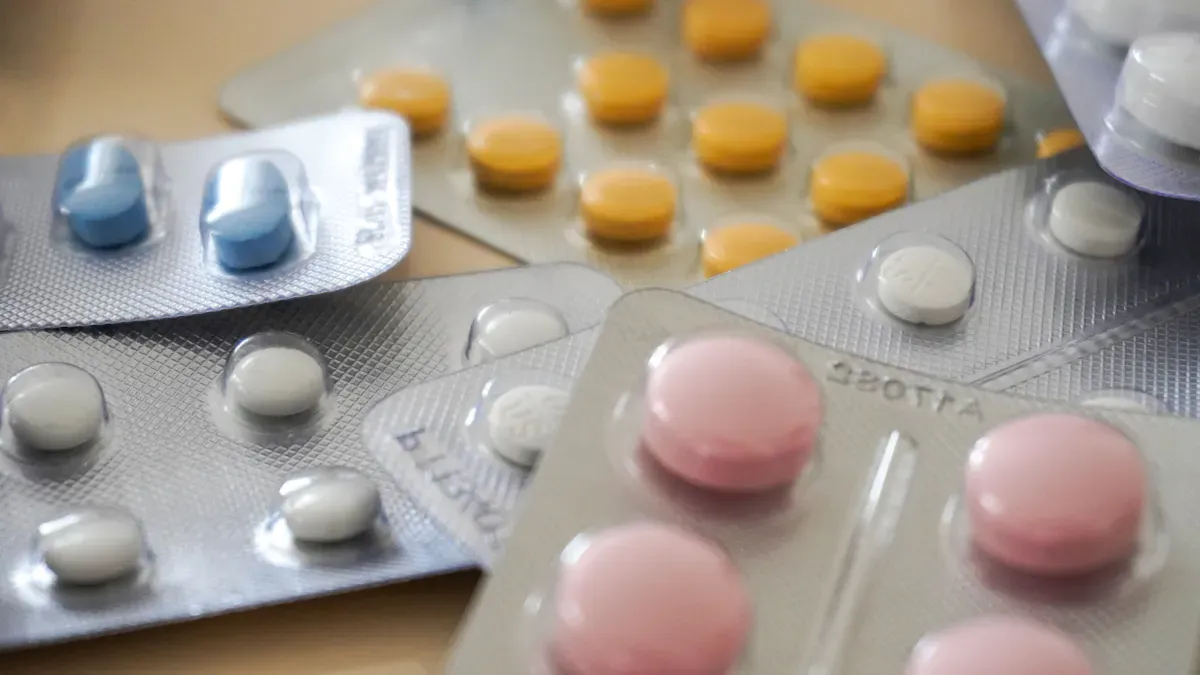
Image Source: pexels
When you choose blister packaging, you need to look at how each plastic performs. The main plastics—PVC, PET, and PS—each have unique qualities. You can see the differences in clarity, strength, cost, recyclability, and barrier properties.
Material | Clarity and Shelf Appearance |
|---|---|
PET | High clarity; stays clear after forming with good process control |
PVC | Clear with strong definition; clarity can change with thickness and additives |
PS | Very clear and glassy; can show stress marks if bent or pressed too hard |
PET gives you excellent clarity and keeps its look after forming.
PVC also looks clear but can change depending on how thick it is or what is added to it.
PS has a glassy look, but it may show marks if you bend it.
For barrier properties:
PET blocks moisture and gases very well. This makes it a top choice for food and beverage blister packaging.
PVC keeps out moisture, but it does not match PET for food safety or recyclability.
PS does not block moisture or oxygen as well as PET or PVC.
When you think about cost, PVC is usually cheaper. PET costs more but gives you better safety and recycling options. PS is light and easy to shape, but it is not always recyclable.
Note: PET is one of the most recycled plastics in the world. You can recycle it in most curbside programs. PVC is hard to recycle and can release harmful chemicals if burned. PS is not always accepted for recycling, so it can add to waste.
You need to pick the right plastic for your product. Each type of blister packaging works best for certain uses.
PVC is the most common for pharmaceutical blister packaging because it is cheap and fast to make.
If you need better protection from moisture, you can use PVC coated with PVDC.
For the best protection, cold-formed aluminum-based blister packaging keeps out light and moisture.
Decision Factor | PET Sheet | PVC Sheet |
|---|---|---|
Food safety | ⭐⭐⭐⭐⭐ | ⭐⭐ |
Sustainability | ⭐⭐⭐⭐⭐ | ⭐ |
Forming stability | ⭐⭐⭐⭐ | ⭐⭐⭐ |
Compliance risk | Low | High |
Long-term value | High | Declining |
PET is the best for food blister packaging. It is safe, sustainable, and keeps its shape well.
PVC is less safe for food and faces more rules and risks.
PET is the long-term answer for brands that care about safety and the environment.
PS blister packaging is light and stiff. You often see it in electronics, toys, and retail items.
PET and PVC can also be used, but PS gives a clear, glassy look that helps products stand out.
For items that need to stay dry or safe from air, PET works better.
PET and PS both give a clear, shiny look for cosmetics.
PET is better if you want to recycle the packaging.
Tip: Always check if your blister packaging needs to be food-safe, recyclable, or extra strong. This helps you pick the right plastic.
High-barrier recycled ps blister packaging is a new choice for brands that want to protect products and help the planet. This type of blister packaging uses recycled PS and adds a special layer to block moisture and oxygen.
Benefits:
Uses recycled material, which cuts down on waste.
Gives good protection for products that need to stay dry.
Keeps the clear, glassy look of PS.
Limitations:
Not all recycling centers accept PS, so it may still end up as waste.
The barrier is better than regular PS but may not match PET for some foods or medicines.
Some places have rules against using PS, so check local laws.
If you want blister packaging that looks good and uses recycled material, high-barrier recycled ps blister packaging is a smart choice. Just remember to check if your area recycles PS.
Blister packaging gives you many options. You can choose PET for food and recycling, PVC for low cost, or PS for a clear look. High-barrier recycled ps blister packaging helps you protect products and support sustainability.
You often find PVC, PET, and PS in blister packaging. Each plastic has its own good points. PET is easy to recycle and looks very clear. PVC costs less and can be shaped easily. PS is used for products that need to be cheap. Think about how well the plastic protects your product. Also, check if it blocks moisture and fits your green goals.
Material | Cost | Performance | Sustainability |
|---|---|---|---|
PVC | Low | Strong | Limited |
PET | Moderate | Clear | Recyclable |
PS | Low | Durable | Moderate |
Pick materials that keep your product safe and follow rules.
Try to use eco-friendly choices for a better future.
Oem blister packaging is made by a manufacturer for your brand. You can sell products with your own logo and design.
A plastic sheet is heated until it gets soft. Then, it is shaped over a mold. Thermoformed packaging keeps products safe and lets people see them in stores.
Yes, you can use custom vacuum forming for oem blister packaging. This makes packaging that fits your product just right. You can create special shapes and sizes.
Tip: Ask your supplier about oem blister packaging choices for your products.


