
Views: 0 Author: Site Editor Publish Time: 2026-09-23 Origin: Site


Retailers and packers face a constant, dual challenge in fresh produce logistics. You must minimize transit damage like bruising while maximizing visual appeal on the retail shelf. Selecting the wrong cavity configuration or material density directly causes costly problems. It leads to increased spoilage, highly inefficient pallet utilization, and misalignment with strict retail buyer requirements. When these structural factors fall out of balance, your profitability plummets. Evaluating a 2-8 cell PET apple container requires careful planning and balancing. You must weigh fruit sizing against your retail distribution channels and packaging automation capabilities. In this guide, we explore how to select the optimal cavity count for your specific distribution strategy. You will also learn how to assess structural integrity accurately. Finally, we will cover how to integrate these solutions smoothly into your existing automated or manual packing lines.
Polyethylene Terephthalate (PET) now dominates as the industry standard for fresh produce. Older materials simply cannot match its performance. Traditional molded pulp traps moisture and hides the fruit from consumers. PVC offers clarity but creates significant environmental compliance issues. PET delivers high impact-resistance. This prevents compression damage during transport. It also offers advanced anti-fog capabilities. When shoppers browse the aisle, they expect superior optical clarity. Premium apple blister packaging gives them an unobstructed view of the fruit's color and quality. They can buy with total confidence.
Modern supermarkets demand strict adherence to environmental mandates. You must adapt your supply chain accordingly. We see a massive shift toward highly recyclable mono-materials today. Recycled PET (rPET) leads this transformation. Mixed-plastic alternatives often end up in landfills. Conversely, pure PET aligns perfectly with major supermarket carbon footprint mandates. It integrates seamlessly into established circular economy goals. Choosing rPET proves your commitment to sustainable agriculture. It satisfies both eco-conscious consumers and rigorous retail procurement standards.
Packaging upgrades must justify their upfront expense. You can frame the return on investment easily. Focus entirely on reduced shrink. Spoilage and bruising destroy profit margins rapidly. Protective PET structures isolate each piece of fruit. They stop chain-reaction bruising in its tracks. Furthermore, superior packaging allows you to command premium price points. Organic or specialty varieties like Honeycrisp require visible, rigid protection. Shoppers willingly pay more when they see flawless, safely encased produce.
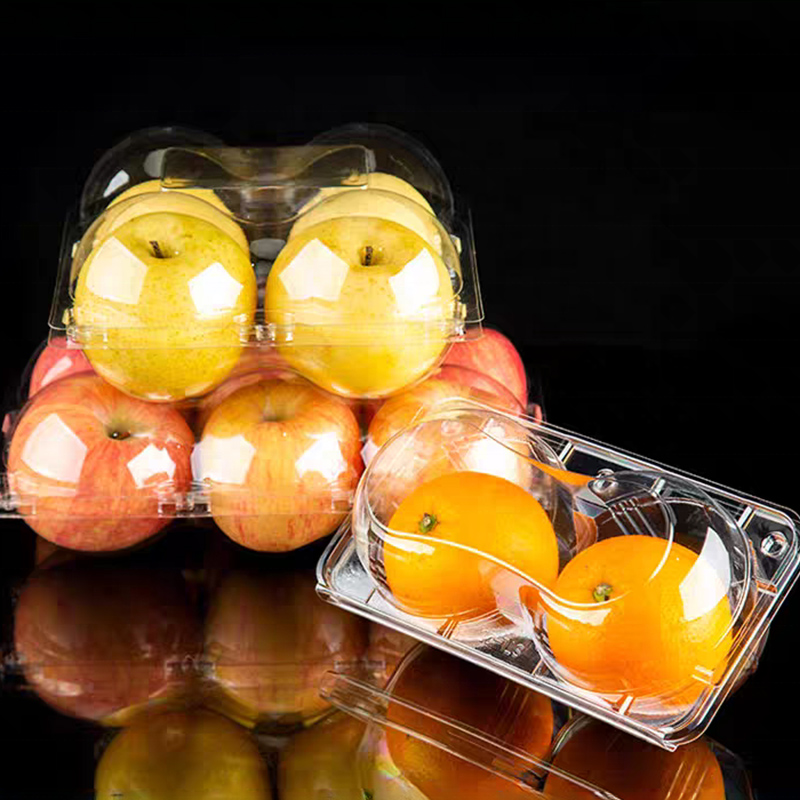
| Configuration | Best For (Caliber) | Primary Retail Channel | Key Business Outcome |
|---|---|---|---|
| 2-Cell | Large / Oversized | Convenience Stores, Premium Grocers | Maximizes unit margin; ideal for grab-and-go. |
| 4-Cell | Mid-to-Large | Standard Supermarkets | Balances volume with premium shelf presentation. |
| 6-Cell | Small-to-Medium | Big Box Stores, Regional Grocers | Drives volume while keeping individual fruit protected. |
| 8-Cell | Small (Lunchbox size) | Warehouse Clubs (Costco, Sam's Club) | Maximizes SKU turnover; requires high sheet rigidity. |
You should deploy 2-cell designs strategically. They work best for large caliber apples and premium organic lines. We also recommend them for convenience store grab-and-go sections. These smaller packs cater to single shoppers or commuters. The primary business outcome here is margin expansion. You can maximize unit margin significantly. High-end varieties like Pink Lady or SweeTango require individual protection. Shoppers will not accept a single bruise on a premium tier apple. The 2-cell pack guarantees this level of cosmetic perfection.
The 4-cell pack serves as the undisputed workhorse. It is best for mid-to-large calibers. You will find them dominating standard grocery end-caps. They appeal directly to weekly shopper demographics. A family can consume a 4-pack easily within a few days. The business outcome is highly reliable. It perfectly balances moving volume with maintaining a premium presentation. Furthermore, 4-cell trays offer the most predictable pallet utilization. This standard footprint simplifies regional distribution logistics for your warehouse teams.
High-capacity packs address entirely different market needs. They are best for smaller calibers. Think of school lunch sizes or high-yield Gala and Fuji varieties. Warehouse club retailers like Costco or Sam's Club demand these formats. The core business outcome is driving much higher volume per SKU. However, larger trays introduce structural challenges. They require robust structural integrity in the PET sheet. If the material is too thin, the center tray will bow under stacking pressure. This bowing transfers dangerous weight directly onto the middle apples.
You cannot use a generic cavity size for all fruit. The blister cavity must closely match the fruit's natural geometry. Sizing mismatches cause immediate damage during transit. If you allow loose fits, the fruit rolls continuously. This constant movement causes severe transit scuffing on the skin. Conversely, overly tight fits are equally dangerous. When automated machinery presses fruit into a tight mold, pressure bruising occurs. We advise sourcing custom-molded apple blister packaging if your orchard produces uniquely shaped heirloom varieties.
Fresh apples continue to breathe after harvest. You must assess the necessity of engineered venting slots. Proper airflow remains non-negotiable for fruit packaging. Without adequate ventilation, PET traps ethylene gas inside the container. It also traps natural condensation from temperature fluctuations. This trapped environment accelerates the ripening process drastically. It also creates a perfect breeding ground for fungal growth. Always verify your chosen trays feature strategically placed side vents to expel this trapped gas.
Pallets of packaged fruit endure immense vertical pressure. You must evaluate the ribbing design of the blister pack carefully. Flange rigidity is another vital metric. These structural elements ensure the container withstands heavy palletization. A well-designed tray acts like a shock absorber. It carries the vertical load through its plastic walls, not through the contents. If the flange collapses, weight transfers directly to the fruit. This guarantees a rejected shipment upon arrival at the distribution center.
Do not buy packaging without consulting your operations team. You must consider manual versus automated denesting workflows. When blister packs arrive, they are tightly nested together. They must separate cleanly on the line. Static cling or vacuum locking will jam your automated denesters. This halts production and destroys your daily throughput metrics. Ensure your supplier uses anti-static food-safe coatings. They should also engineer small denesting lugs into the mold design.
Warehouse reality dictates your packaging choices. Blister packaging requires strict temperature control before use. If your storage facility gets too hot, thin PET sheets will warp. Warped trays will not run through automated equipment. Additionally, address the nesting ratio. This dictates your inbound freight costs. Tightly nested empty containers allow you to ship more units per truckload. Always calculate how many empty trays fit on a standard pallet before signing a supply contract.
Food safety compliance starts with your packaging supplier. You must ensure they hold GFSI-recognized certifications. Look for current BRCGS or SQF credentials. These prove their facility is approved for direct food contact manufacturing. Furthermore, demand lot-level traceability for their PET sheet extrusion. If a contamination issue occurs, you must track the packaging back to its exact manufacturing shift. Reputable suppliers provide this documentation without hesitation.
You face a critical financial decision regarding molds. Analyze the cost-benefit carefully. Using a supplier's existing stock molds saves time and capital. Stock 2-8 cell molds work perfectly for standard commodity apples. However, investing in custom thermoforming molds might be necessary. Tailored cavities protect proprietary, oddly-shaped apple varieties better. Custom tooling requires an upfront fee, but it eliminates transit damage completely for unique fruit shapes.
Never place a seasonal volume order based on a drawing. You must mandate pre-production physical sampling. Shortlist suppliers who actively support ISTA (International Safe Transit Association) testing protocols. They should encourage vibration and drop testing. You need to conduct these tests using your actual fruit. Simulating cross-country truck vibrations reveals hidden flaws in the hinge design or cavity spacing. Only partner with manufacturers who help you interpret these test results.
Choosing the right apple blister packaging requires moving beyond basic cost-per-unit metrics. You must evaluate the total landed cost. This encompasses shrink reduction, improved logistics, and elevated retail shelf impact. Proper cell configurations protect your product while perfectly targeting specific consumer demographics. We advise procurement teams to take immediate action. First, conduct a thorough packing line audit to determine your automation limits. Next, request stock samples of 2, 4, 6, and 8-cell PET containers. Finally, execute a rigorous pilot transit test with your team before committing to seasonal volumes. This methodical approach ensures your fruit arrives flawlessly, protecting both your brand reputation and your bottom line.
A: Typically ranges from 0.3mm to 0.6mm, depending on the cell count and required stacking strength. Higher cell counts generally require thicker gauges or reinforced ribbing to prevent bowing.
A: Yes, but the trays must be specifically designed with denesting lugs and anti-static coatings to ensure smooth feeding through automated tray sealers or clamshell closers.
A: Engineered blister packs feature precise ventilation holes or side slots that allow for essential airflow, dispersing ethylene gas and preventing premature ripening while maintaining structural integrity.
A: Yes, provided the supplier uses FDA or EFSA-approved "super-clean" recycling processes. Food-grade rPET is a standard, highly viable option for ESG-conscious agribusinesses.


