
Views: 0 Author: Site Editor Publish Time: 2026-09-22 Origin: Site


Shifting from standard packaging to a custom vegetable clamshell box represents a significant capital and operational decision. You often face a frustrating friction point. Off-the-shelf packaging forces compromises on ventilation, branding, and pack density. You might sacrifice optimal airflow or struggle to fit standard containers neatly onto retail shelves. This leads directly to increased spoilage or lost retail visibility.
Why should you settle for generic solutions when your fresh produce demands precision? This guide defines the exact volume thresholds, operational bottlenecks, and product-specific requirements that justify custom tooling. We will explore how specialized dimensions and advanced airflow designs protect your bottom line. You will learn to navigate initial tooling costs and calculate realistic lead times. Custom clamshell packaging transforms a basic utility into a strategic, margin-boosting asset.
Generic packaging assumes all produce breathes and bruises the same way. We know this is false. Standard clamshells cater to the widest possible market. They do not optimize for your specific crop. Understanding these limitations is the first step toward better packaging decisions.
Every vegetable respires differently. Generic ventilation holes fail miserably at managing these varying respiration rates. Standard boxes often feature a few punched holes on the top and bottom. This basic airflow does not accommodate high-respiration crops like broccoli or asparagus. When trapped moisture accumulates, it creates condensation. Condensation rapidly breeds mold and accelerates decay.
Conversely, excessive ventilation dehydrates leafy greens. If you rely on stock designs, you risk premature spoilage on the shelf. Retailers reject loads when condensation obscures the product. You lose money when generic airflow designs fail to match your specific produce physiology.
Poorly fitted standard boxes create compounding problems during transit. Standard clamshell dimensions rarely match up perfectly with optimal pallet layouts. This mismatch causes significant supply chain friction.
Custom designs maximize cube utilization. They nest perfectly within standard transport cartons. This protects the product and maximizes every inch of truck space.
Standing out on crowded retail shelves is incredibly difficult. You blend in instantly if you use the exact same generic vegetable box as your cheapest competitors. Shoppers process visual cues in milliseconds. A standard, flimsy box signals a commodity product. It strips away your brand identity. You lose the opportunity to showcase premium quality through unique structural design. Custom packaging elevates your product presentation. It tells consumers you care enough to protect your harvest properly.
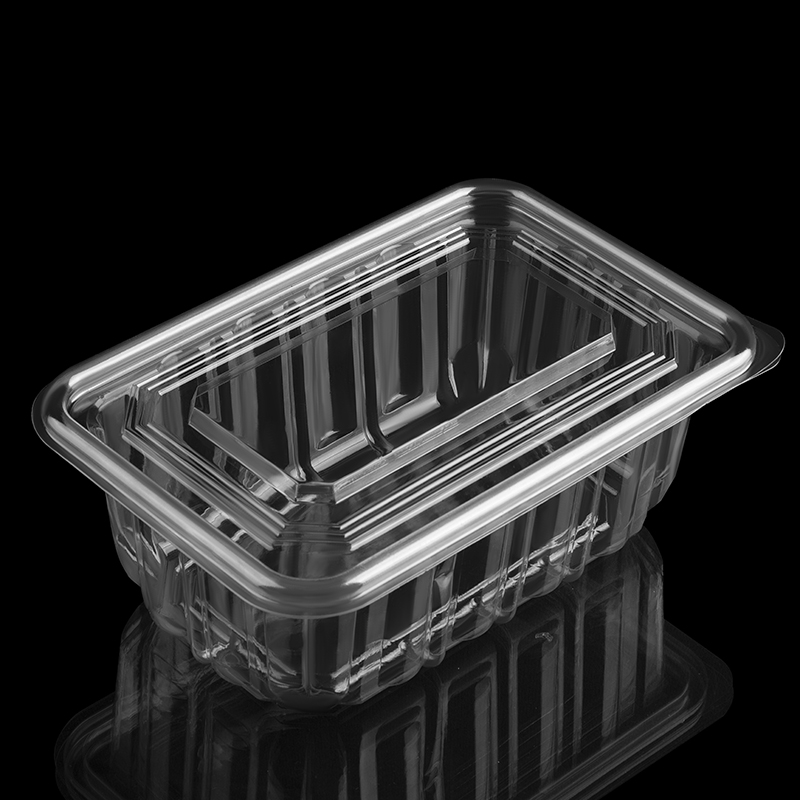
You cannot solve complex agricultural challenges with a one-size-fits-all plastic box. Produce specific requirements act as the primary functional triggers for moving to custom tooling. Engineering packaging around the plant, rather than forcing the plant into the packaging, changes everything.
Airflow engineering requires precise math. You must design custom ventilation based on actual product respiration rates. Climacteric fruits, like tomatoes, continue ripening after harvest. They release ethylene gas and require specific exhaust ports. Custom clamshells allow you to place ventilation holes exactly where they benefit the product most. You can direct airflow to cool the center of the pack quickly during forced-air cooling processes.
Furthermore, refrigerated environments demand specialized treatments. Temperature fluctuations between the farm, truck, and retail cooler cause immediate condensation. Custom designs often incorporate advanced anti-fog coatings. This chemistry prevents micro-droplets from forming on the clear plastic lid. Shoppers demand high visibility. If they cannot see the product clearly through the lid, they will not buy it. Anti-fog properties ensure crystal-clear visibility, preserving shelf appeal and reducing rejected shipments.
Bruising destroys profit margins instantly. Delicate, high-value produce needs tailored physical protection. Standard boxes allow small fruits to roll and collide during transit.
Consider the engineering behind a crystal pet cherry clamshell box. Designers create specific internal contours for this application. The geometry cradles the cherries, preventing them from crushing each other. The custom depth perfectly matches the average fruit diameter. This exact tolerance eliminates internal movement. Custom dimensional accuracy guarantees your high-margin items arrive in pristine condition. You charge premium prices because the product looks flawless upon arrival.
Consumers routinely open packages in the store to inspect or sample the produce. This ruins the package and creates unsellable merchandise. Custom clamshells solve this through engineered lock mechanisms.
Moving forward requires strict attention to technical details. Defining exact vegetable clamshell box specifications ensures the final product functions perfectly in your facility. You must balance material science, machinery limits, and branding needs.
Your choice of material dictates performance, sustainability, and compliance. Conventional PET (Polyethylene Terephthalate) offers unmatched clarity and strength. It resists shattering in cold environments. However, retailers now push heavily for sustainability. Recycled PET (RPET) answers this call. Using RPET reduces reliance on virgin plastics while maintaining high clarity.
Emerging alternatives like molded fiber or paper clamshells provide excellent end-of-life biodegradability. However, they lack the transparency consumers expect for fresh produce.
Regardless of material, food-grade compliance is non-negotiable. You must ensure the chosen material meets rigorous FDA or EU standards for direct food contact. Suppliers must provide migration test results proving no harmful chemicals leach into acidic produce like tomatoes.
Packaging Material Comparison
| Material Type | Clarity & Visibility | Durability in Cold | Sustainability Profile |
|---|---|---|---|
| Conventional PET | Excellent | High | Recyclable, but uses virgin fossil fuels. |
| Recycled RPET | Very Good | High | Highly sustainable; supports circular economy. |
| Molded Fiber / Paper | Poor (Opaque) | Moderate (Can absorb moisture) | Compostable; biodegradable. |
A beautiful package is useless if it jams your production line. Custom designs must integrate seamlessly into your existing workflows. You cannot afford costly machinery overhauls just to accommodate a new box.
Engineers must calculate precise denesting lugs. These small protrusions keep empty nested trays slightly separated. When automated robotic arms grab a tray, it must release smoothly. If trays stick together, the line stops. Furthermore, the base dimensions must ride smoothly along your existing conveyor belts without tipping or catching on guide rails. Custom specifications bridge the gap between aesthetic design and manufacturing reality.
Standard boxes often feature ridges or ribs across the entire lid for structural support. These irregular surfaces make automated labeling nearly impossible. Labels wrinkle, bubble, or peel off entirely.
When you customize, you control the labeling real estate. You can design smooth, recessed panels specifically sized for your branding labels and barcodes. A designated smooth surface ensures automated applicators adhere labels perfectly every time. This protects your brand image and ensures barcodes scan flawlessly at the retail checkout.
Business decisions rely on hard numbers. Custom tooling requires upfront capital. However, you must view this as a long-term investment rather than an immediate expense. Calculating the return on investment (ROI) reveals exactly when custom packaging becomes a financial necessity.
Creating a custom mold involves engineering time, aluminum tooling, and prototype runs. These upfront fees can seem daunting initially. However, custom designs allow manufacturers to optimize the sheet gauge (thickness). By engineering structural ribs into the right places, you can often use thinner plastic without sacrificing strength.
Thinner plastic means less material used per unit. Over time, this reduction in raw material significantly lowers your per-unit pricing. The initial tooling fee amortizes across millions of units. Eventually, the custom unit cost often drops below the price of heavy, over-engineered stock packaging.
Customization requires economies of scale. You cannot justify tooling for a backyard garden yield. You must define realistic minimum order quantities (MOQs).
Typical industry MOQs for custom clamshell runs start between 50,000 and 100,000 units. At lower volumes, the machine setup time and tooling costs heavily outweigh the benefits. The project remains a luxury expense. Once your annual volume exceeds 250,000 units, the math shifts dramatically. At these thresholds, custom manufacturing reaches optimal efficiency. The unit cost plummets, and the investment pays for itself rapidly.
The most powerful ROI factor is spoilage reduction. Retailers issue chargebacks for damaged or moldy produce. You absorb the cost of lost goods, wasted freight, and damaged retailer relationships.
Let us calculate a realistic scenario. Suppose your current stock packaging results in a 5% spoilage rate due to poor ventilation and transit bruising. A custom-engineered clamshell reduces that spoilage to 2%.
For a mid-sized operation, a 2-3% reduction in spoilage can entirely fund a custom packaging program within the first harvest season. The custom box stops being a cost center; it becomes a profit protector.
Your custom packaging is only as reliable as the company manufacturing it. Choosing the right vegetable clamshell box supplier dictates the entire project's success. You need a partner, not just a vendor.
Outsourced tooling causes massive delays. When a supplier relies on third-party machine shops, communication breaks down. Revisions take weeks instead of days.
Select suppliers who utilize integrated, in-house tooling and rapid prototyping. These partners use advanced CAD software to build 3D models. They can quickly 3D print sample molds and run small-batch prototypes. You receive physical samples to test with your automated denesters and fill lines before committing to final steel or aluminum production molds. This in-house capability drastically reduces project risk and accelerates your time-to-market.
Consumers actively scrutinize greenwashing. If your package claims to use 100% recycled RPET, you must prove it. Suppliers must offer total material transparency.
Ask for verifiable documentation regarding their recycled content percentages. You should also demand structural tolerance reports. They must guarantee that the plastic gauge remains consistent across the entire production run. Thin spots in the plastic cause catastrophic failure during palletization. A trustworthy supplier provides regular quality assurance reports to verify material consistency.
Agriculture is unpredictable. A sudden heatwave can accelerate harvest times, causing immediate, unexpected volume spikes. Your supplier must handle these fluctuations gracefully.
Assess their supply chain redundancy. Do they have multiple thermoforming lines? Do they secure raw material contracts months in advance to prevent shortages? A reliable supplier absorbs peak harvest demands without extending lead times. They maintain steady production schedules, ensuring you never leave valuable produce rotting in the field because you ran out of boxes.
Customizing a vegetable clamshell box serves as a calculated risk management strategy. It is not just a cosmetic marketing upgrade. When you control the airflow, structural integrity, and retail presentation, you directly control your profit margins.
Use a simple decision matrix. If spoilage rates eat into profits, if automated filling lines constantly bottleneck, or if you struggle to justify premium pricing on the retail shelf, standard packaging is failing you. Customization represents the logical, financially sound next step.
Take action today. Audit your current packaging fail rates. Measure exactly how much produce you lose to condensation or bruising. Then, contact a shortlisted supplier to request material samples and an initial tooling estimate. You will quickly see how engineered packaging protects both your harvest and your bottom line.
A: Realistic industry MOQs typically range from 50,000 to 100,000+ units. This depends entirely on the supplier and the complexity of the custom mold. Machine setup and tooling amortization require high volumes. The higher your MOQ, the lower your per-unit cost becomes. Smaller runs remain cost-prohibitive due to fixed setup expenses.
A: A transparent timeline usually spans 4 to 8 weeks. This process begins with initial CAD design. Suppliers then create 3D printed models or sample molds for physical testing. Once you approve the physical prototype, the supplier machines the final aluminum production mold. Final production runs and shipping follow immediately after.
A: Yes, significantly. Custom designs allow precise ventilation hole placement. Engineers match these openings to the specific respiration rates of enclosed vegetables. This prevents suffocating the produce or trapping excess moisture. Additionally, tailored anti-fog features prevent condensation, directly extending freshness and reducing premature rot.
A: Yes, PET and RPET materials are highly recyclable in most municipal infrastructures. However, you must design for recyclability. Avoid applying mixed-material labels or heavy adhesives that contaminate the recycling stream. Always check local recycling realities, but clean PET remains one of the most widely accepted and repurposed plastics globally.


