
Views: 0 Author: Site Editor Publish Time: 2026-10-08 Origin: Site


Selecting the wrong ventilation configuration leads directly to premature spoilage. Retailers reject decaying shipments instantly. This disrupts profit margins and severely damages brand reputation. The central challenge in postharvest logistics comes down to a delicate balancing act. You must manage specific respiration rates through precise airflow. At the same time, you must preserve physical protection and moisture retention.
This article provides a rigorous technical evaluation framework. We will help you select proper ventilated produce packaging aligning exactly with specific crop needs. You will discover how to match airflow dynamics to harsh supply chain realities. We will explore how container designs interact efficiently with automated packing equipment. By the end, you will know exactly how to evaluate physical features preventing costly postharvest losses.
Fresh produce continues to breathe long after harvest. It consumes oxygen and releases carbon dioxide continually. This process generates metabolic heat and moisture. Ongoing postharvest respiration creates a highly volatile internal package environment. When you trap this metabolic activity inside poorly ventilated containers, you accelerate product degradation.
Improper airflow drives several primary spoilage mechanisms.
A successful packaging solution strikes a definitive balance. It must stabilize internal atmospheric conditions predictably. It needs to withstand extreme cold-chain transit environments. Finally, it must consistently meet the strict aesthetic standards modern retailers demand. Buyers want clear, protective, and fresh-looking packaging.
You need to evaluate specific ventilation mechanisms carefully. Vents fall into distinct categories based on size, placement, and chemical synergy.
First, consider Macro-Perforation versus Micro-Perforation. Packaging engineers measure breathability using Oxygen Transmission Rates (OTR). Macro-perforations feature physical holes larger than one millimeter. They work best for high-respiration items like berries and grapes. These crops need rapid field heat dissipation. They also require immediate moisture release to prevent widespread mold.
Conversely, micro-perforations rely on laser-scored microscopic holes. Packaging suppliers use them extensively in Modified Atmosphere Packaging (MAP). They strictly control OTR to protect chopped or highly sensitive produce. Fresh-cut salads require exact gas ratios to delay browning. Micro-perforations allow just enough oxygen to enter while letting excess carbon dioxide escape safely.
Next, assess vent placement thoroughly. You must decide between symmetrical and asymmetrical configurations.
Vent locations directly drive cross-ventilation dynamics. Placing holes strategically on the top, bottom, and sidewalls creates distinct airflow channels. Air must enter one side and exit the other. Base vents remain absolutely necessary for forced-air cooling compatibility. Forced-air systems use pressure differentials to pull cold air through pallets. If you block the container bottom, cold air cannot push through efficiently. Cooling times increase drastically, severely degrading product shelf life.
Finally, examine the critical synergy between physical vents and surface coatings.
Physical vents alone often fail to stop surface condensation. High-humidity cold chains present unique physical challenges. Severe temperature fluctuations inevitably cause internal sweating. You must evaluate the necessity of hydrophilic surface treatments in clear plastics. Anti-fog coatings lower the surface tension of water droplets. They spread accumulated moisture into a clear, transparent film. This prevents vision-blocking droplets from obscuring the produce. Consumers will not buy fruit they cannot see clearly.
The physical material you choose fundamentally dictates ventilation performance. Different substrates react uniquely to punching, scoring, and crushing forces.
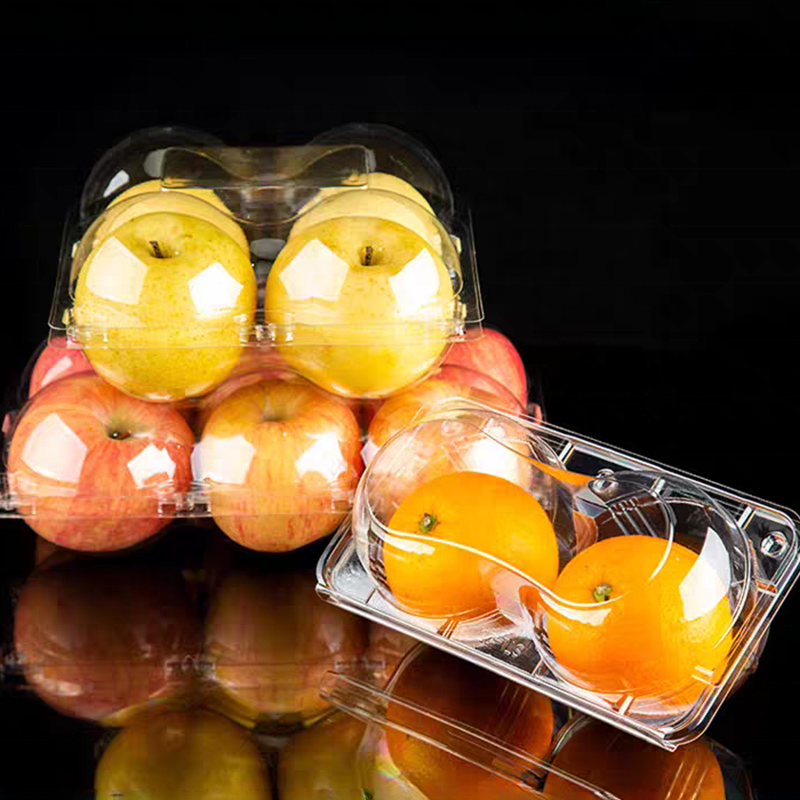
Rigid plastics dominate the fresh produce sector. Materials like PET and recycled PET (rPET) offer excellent structural advantages. For example, a PET fruit blister container provides reliable crush resistance. It maintains rigidity even multiple vent holes punch through its walls. Rigid plastics allow for exact, uniform punch-hole configurations. Manufacturers can stamp large holes cleanly. They accomplish this without tearing surrounding material or compromising structural integrity. This ensures reliable performance during high-speed transit.
Flexible films and mesh nets offer a completely different performance profile. Mesh provides extreme breathability. This makes it popular for robust commodities like onions and citrus. However, mesh offers limited physical protection against impact bruising. Permeable polymer films serve specialized MAP applications well. They allow specific molecular gas exchanges. Unfortunately, they lack the rigid shielding delicate fruits desperately require.
Corrugated materials and molded fiber present another distinct category entirely. Molded fiber naturally wicks moisture away from the product. This inherent property reduces localized condensation effectively. However, you must carefully engineer corrugated packaging designs. Large ventilation die-cuts remove critical structural material from the box walls. If engineered incorrectly, these cutouts severely weaken compression strength. This reduction in Edge Crush Test (ECT) values often leads to catastrophic pallet collapse. Structural failure ruins the primary packaging inside.
You cannot separate packaging design from underlying crop physiology. Every commodity breathes at a drastically different pace.
High-respiration crops include broccoli, asparagus, and fresh berries. They require a maximum open-area percentage (OAP) in their packaging. A high OAP allows rapid dissipation of field heat. It also purges ongoing respiratory heat effectively. Without large vents, these crops literally cook themselves inside the closed box. They senesce rapidly and spoil within days.
Moderate-to-low respiration crops include apples, citrus, and root vegetables. They require highly balanced, restrictive ventilation. Too much airflow accelerates moisture loss unnecessarily. You must prevent shriveling over prolonged storage periods. Limiting the overall open space achieves this crucial balance.
Buyers need a rigorous, data-driven evaluation framework. We advise mapping your specific commodity's respiration rate directly against supplier OTR data. Respiration rates are measured in milligrams of carbon dioxide per kilogram per hour. Match this metabolic data to the physical vent area. Never accept generalized "breathable" claims without hard laboratory data backing them up.
Respiration Rate and Packaging Synergy
| Produce Category | Respiration Rate (mg CO2/kg·h) | Recommended Ventilation Strategy |
|---|---|---|
| Berries & Asparagus | High (40 - 60+) | Macro-perforations, High OAP (>8%) |
| Apples & Citrus | Moderate (10 - 20) | Balanced vents, Moderate OAP (3 - 5%) |
| Root Vegetables | Low (< 10) | Minimal vents to prevent dehydration |
| Fresh Cut Salads | Variable (MAP dependent) | Laser-scored micro-perforations |
Even the best container designs fail if implemented poorly. You must anticipate real-world supply chain friction points constantly.
We identify three major implementation risks buyers must navigate.
Selecting effective produce packaging requires methodical, data-driven evaluation. You must first define your specific crop's exact respiration needs. Next, evaluate the required open-area percentage to manage moisture and heat effectively. Always test physical material strength rigorously. Ensure custom vents do not compromise critical load-bearing capacity. Finally, verify cold-chain airflow alignment across all primary and secondary packaging layers.
We recommend several highly actionable next steps for proactive buyers. Start by requesting physical prototype samples from your preferred supplier. Conduct rigorous transit trials using internal data loggers. These loggers track real-time temperature drops during actual shipments. Validate your forced-air cooling times thoroughly. Use the new packaging formats in a controlled cooler environment before committing to a full-scale rollout. Careful, methodical testing protects both your product quality and your ultimate profit margins.
A: You should test Oxygen Transmission Rates (OTR) and calculate your product's specific respiration rate. Consult directly with packaging engineers rather than guessing. They use scientific data to match hole diameters to the exact gas exchange required for your commodity.
A: Yes, removing material naturally reduces structural strength. However, precision engineering solves this problem effectively. Designers use vertical ribbing and reinforced corner geometries. These features compensate for the plastic removed by ventilation holes. This ensures the container maintains its crucial crush resistance during heavy palletization.
A: No. Ventilation works entirely in tandem with the cold chain. It never replaces it. Packaging helps distribute cold air and manage internal moisture. However, severe temperature abuse on a loading dock will still cause irreversible spoilage.
A: Passive ventilation uses physical macro-holes to allow unrestricted, natural airflow. This facilitates rapid cooling and moisture release. Active ventilation involves engineered micro-perforations used in Modified Atmosphere Packaging (MAP). These tiny holes strictly regulate exact gas exchanges to slow ripening.


