
Views: 0 Author: Site Editor Publish Time: 2026-06-09 Origin: Site


Packaging engineers and food product developers constantly balance material performance against strict regulatory demands. Selecting the right plastic remains a critical decision for market success and consumer safety. Choosing the wrong packaging material often causes catastrophic supply chain issues down the line. You might face compromised shelf life, structural failures during long transit routes, or sudden compliance violations leading to costly product recalls.
This article provides a transparent, technical, and commercially focused framework for evaluating polypropylene. You will learn exactly when it makes a smart operational decision to use PP food containers for your food product line, and when you should look elsewhere. We remove the typical manufacturing guesswork so you can confidently specify and scale your next packaging rollout.
Heat Tolerance: PP is the industry standard for hot-fill processes and microwaveable applications due to its high melting point (approx. 320°F/160°C).
Material Alternatives: Choose PP for heat resistance and moisture barriers; default to PET for high clarity, or HDPE for cold-temperature impact strength.
Compliance: Food-grade PP (Resin Code #5) is naturally BPA-free and highly stable, making it a low-risk choice for rigorous FDA and EU food contact compliance.
Versatility: PP scales efficiently across diverse formats, from injection-molded deli tubs to thermoformed PP blister packaging for retail portions.
Switching your product lines to polypropylene offers substantial operational leverage. Procurement managers and packaging engineers favor this material for several highly specific performance attributes. It consistently delivers reliability on the factory floor and end-user satisfaction at the retail level.
We can map the core physical properties of PP directly to tangible business outcomes. Understanding these links helps you justify material shifts during product development.
High Thermal Stability: Polypropylene boasts a melting point of approximately 320°F (160°C). This high heat deflection threshold enables aggressive hot-fill manufacturing processes. Manufacturers can pump hot liquids directly into the containers without causing plastic warping or structural failure. This eliminates the need for intermediate cooling stages, significantly reducing production bottlenecks and speeding up cycle times.
Excellent Moisture Vapor Transmission Rate (MVTR): PP acts as an exceptional barrier against moisture. For dry goods, it actively prevents humidity from entering the package. This stops powders from clumping and crackers from going stale. For liquid products, it prevents moisture from evaporating outward. Managing moisture exchange directly extends the practical shelf life of your inventory.
Fat and Chemical Resistance: Highly acidic foods, cooking oils, and fat-heavy dairy products easily degrade lesser plastics. PP offers tremendous chemical resistance. It prevents container degradation. Furthermore, it stops "flavor scalping," a process where the plastic absorbs essential oils and flavors from the food. Your product tastes exactly as intended upon opening.
Polypropylene is one of the lightest commercial plastics available. It possesses a lower density (roughly 0.90 g/cm³) compared to PET (roughly 1.38 g/cm³). Lower density means you produce significantly more containers per pound of purchased resin. When you scale production to millions of units, this material yield improvement drastically lowers your unit economics. Additionally, lighter containers reduce overall pallet weight. This directly translates into lower freight shipping costs across your entire distribution network.
You cannot specify packaging in a vacuum. Polypropylene often competes directly against Polyethylene Terephthalate (PET) and High-Density Polyethylene (HDPE). Each polymer serves distinct commercial applications. Knowing when to pivot between them prevents costly packaging failures.
PET dominates the retail beverage sector, but PP frequently wins in the prepared foods category. The choice usually comes down to heat versus aesthetics.
When to choose PP: Select polypropylene for hot foods, microwaveable ready-meals, and applications requiring a robust moisture barrier. PP handles rapid heating without leaching or warping.
When to choose PET: Switch to PET when premium optical clarity acts as your primary marketing requirement. PET offers glass-like transparency, making it perfect for cold-beverage bottles and fresh salad bowls. It allows consumers to clearly inspect the food inside.
Both PP and HDPE belong to the polyolefin family. They share similar chemical resistance properties, but they diverge significantly in temperature tolerances and visual appearance.
When to choose PP: Choose this option when you require semi-transparency or microwaveability. Standard HDPE is naturally opaque and milky. PP allows for better product visibility while safely handling microwave reheating.
When to choose HDPE: Opt for HDPE when designing for sub-zero cold storage. Standard homopolymer PP becomes dangerously brittle in deep-freeze conditions. It will crack or shatter upon impact if dropped. HDPE remains tough and flexible at freezing temperatures.
Common Mistake: Using standard homopolymer PP for frozen meals. You must request a specific copolymer additive if you want to use PP in a freezing environment.
Use the following quick-reference framework to balance temperature requirements, clarity needs, and budget constraints.
Primary Requirement | Recommended Material | Trade-offs / Limitations |
|---|---|---|
High Heat / Hot-Fill / Microwave | Polypropylene (PP) | Lacks glass-like clarity; brittle in extreme cold without additives. |
Premium Optical Clarity | Polyethylene Terephthalate (PET) | Poor heat resistance; cannot be microwaved or hot-filled. |
Deep-Freeze Durability | High-Density Polyethylene (HDPE) | Opaque/cloudy appearance; lower maximum heat threshold than PP. |
The manufacturing versatility of polypropylene allows you to deploy it across multiple structural formats. You can adapt the material to fit everything from industrial bulk shipping to high-visibility single-serve retail items.
Injection molding forces molten plastic into a rigid steel mold. This process yields highly precise, durable containers. It represents the best manufacturing method for rigid deli tubs, thick yogurt cups, and heavy-duty reusable meal prep containers. The primary advantage here is dimensional accuracy. Injection molding creates tight, precise tolerances. This ensures a perfect "snap" fit between the container and its lid, preventing leaks during transit.
Thermoforming heats a flat sheet of plastic until pliable, then uses a vacuum to pull it over a mold. This method is exceptionally fast and cost-effective for large runs. Thermoformed trays are best suited for high-volume, single-use ready meals. If lightweighting your packaging is a top priority, thermoforming provides thinner walls and uses significantly less resin than injection molding.
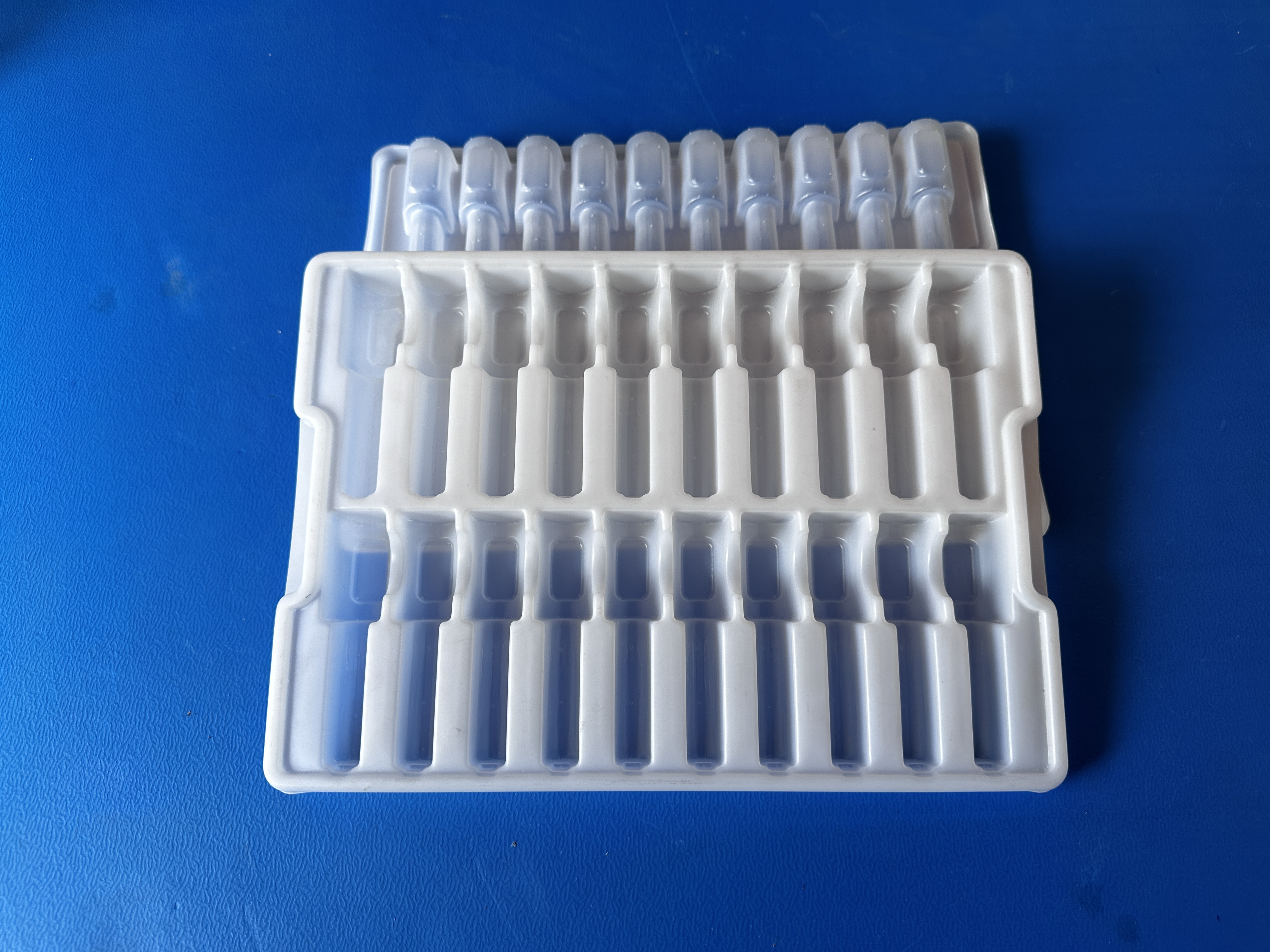
Food brands increasingly utilize thermoformed blister formats to elevate retail presentation and protect product integrity. PP Blister Packaging offers targeted benefits for specialty food sectors.
Application: This format is perfect for single-serve portions, dipping sauces, condiments, and high-visibility retail food products.
Advantage: It provides excellent puncture resistance against sharp transit damage. Furthermore, it creates a robust sealing surface. This makes it highly compatible with Modified Atmosphere Packaging (MAP) technology. By flushing the blister pack with inert gases, you dramatically extend product freshness.
Polypropylene is not strictly limited to rigid containers. The industry heavily relies on woven PP bags, known as Flexible Intermediate Bulk Containers (FIBCs). These massive, flexible bags transport bulk dry ingredients like flour, grains, and sugar. This highlights the incredible tensile strength and overarching versatility of the PP polymer across the broader food supply chain.
Consumer trust directly correlates with material safety. You must confidently navigate global regulatory frameworks when selecting food contact materials. Polypropylene holds one of the strongest safety profiles in the commercial packaging market.
You cannot use generic industrial resins for food applications. You must verify compliance with strict governmental standards. In the United States, this means adhering to FDA standard 21 CFR 177.1520, which governs olefin polymers. In Europe, EFSA sets equivalent rigorous standards. You must actively request "Declaration of Compliance" (DoC) documents from your suppliers. A valid DoC legally certifies that the specific resin batch meets all necessary safety thresholds for direct food contact.
Consumers frequently express concerns regarding chemical leaching in plastics. You need clear facts to address these concerns. Food-grade PP is inherently free of Bisphenol A (BPA) and phthalates. These controversial chemicals simply do not exist in the chemical formulation of standard polypropylene. Choosing PP gives you a highly stable, low-risk material that aligns comfortably with clean-label marketing strategies.
Even safe plastics can interact poorly with extreme food profiles. Migration testing verifies how a plastic behaves under stress. You must verify that your suppliers have conducted proper migration testing under the specific temperature and acidity conditions of your actual food product. For example, packaging a highly acidic tomato paste requires different testing parameters than packaging dry rice. Testing utilizes chemical simulants to ensure no harmful substances migrate from the packaging into the food over its intended shelf life.
Polypropylene is widely recyclable and carries the Resin Identification Code #5. However, you must understand the practical reality of local recycling infrastructure. While the material is technically recyclable, local Material Recovery Facility (MRF) acceptance rates vary globally. You can vastly improve your circularity claims by adopting mono-material designs. If you manufacture both the container and the lid from the exact same PP polymer, MRFs can process the entire package without needing consumers to separate the components.
Even the best materials fail if you execute them poorly. Transitioning to custom PP food containers requires careful supply chain planning. You must proactively manage technical limitations and select manufacturing partners capable of rigorous quality control.
As previously mentioned, standard homopolymer PP fails in deep-freeze conditions. When temperatures drop below freezing, the polymer chain stiffens, becoming highly brittle. If you drop a frozen PP tub, it will likely shatter like glass. You must warn your procurement teams against sourcing standard homopolymer for frozen foods. You must specify an impact-modified PP copolymer instead. Copolymer formulations blend small amounts of ethylene into the mix, retaining essential flexibility at sub-zero temperatures.
Achieving a hermetic seal on a PP tray requires precise material matching. Heat-sealing a top film to a PP container presents distinct technical challenges. Polypropylene has a narrow heat-sealing window. If your sealing machinery runs too cold, the film peels off prematurely. If it runs too hot, you melt the tray flange. You must source compatible PP-based lidding films. Attempting to seal a generic PET film onto a PP tray usually results in weak, unreliable seals and spoiled food.
Understanding the difference in tooling costs dictates your time-to-market strategy. We can break this down into a simple comparison:
Manufacturing Method | Upfront CapEx (Tooling) | Lead Time | Best Use Case |
|---|---|---|---|
Injection Molding | High (Heavy steel molds) | Longer (8-12 weeks typical) | Reusable containers, precise lid fitments. |
Thermoforming | Low to Moderate (Aluminum molds) | Shorter (4-6 weeks typical) | Single-use trays, high-volume production. |
Best Practice: Do not invest in costly injection mold tooling until you have validated your container design using cheaper, rapid 3D-printed prototypes.
Vendor selection ultimately determines product quality. Do not choose packaging partners based solely on the lowest price per unit. You should evaluate vendors against strict operational criteria. Look for facilities holding recognized safety certifications like SQF or BRC. Ensure they operate transparent lot-level traceability systems in case of a product recall. Finally, prioritize manufacturers who offer robust in-house drop testing and thermal testing capabilities to validate your packaging designs before mass production begins.
Polypropylene offers the packaging industry an unmatched combination of functional strength and cost-efficiency. PP food containers routinely provide the best intersection of heat resistance, chemical stability, and yield for hot-fill and microwaveable applications. By understanding its specific limitations—like cold-temperature brittleness—you can easily engineer solutions using specialized copolymers.
As you prepare for your next product launch, focus on these actionable next steps:
Always request and review detailed material specification sheets and Declarations of Compliance (DoC) from your resin suppliers.
Order physical container samples and run them down your actual filling and sealing lines to test machinery compatibility.
Conduct long-term shelf-life tests matching your specific food matrix against the packaging to monitor for moisture loss or flavor scalping.
Collaborate closely with your lidding film suppliers to guarantee a hermetic seal against your chosen PP trays.
A: Yes. Food-grade PP represents the industry standard for microwave use. It features a very high heat deflection temperature, meaning it handles microwave reheating without melting or warping, provided no non-compliant additives are used during manufacturing.
A: Standard PP becomes dangerously brittle below freezing and can easily shatter upon impact. For frozen food applications, you must explicitly specify a PP copolymer designed for cold-impact resistance, or switch entirely to HDPE or PET alternatives.
A: Homopolymer PP consists of a single continuous polymer chain. It is stiffer and offers excellent heat resistance, making it ideal for hot-fill. Copolymer PP includes a small percentage of ethylene. This addition significantly improves the plastic's flexibility and cold-temperature impact strength.
A: Yes. When engineered with the correct barrier layers—such as an EVOH core—PP blister packs provide excellent seal integrity. This traps the inert gas flush inside the package, making it highly effective for MAP applications designed to extend food shelf life.


