
Views: 0 Author: Site Editor Publish Time: 2026-08-25 Origin: Site


Have you ever opened a shipment of premium baked goods only to find a crumbled, unsellable mess? Product movement during transit silently erodes profit margins across the industry. Shifting, smudging, or structural collapse quickly leads to increased return rates. Retailer chargebacks inevitably follow, ultimately devaluing your hard-earned brand reputation.
You can no longer treat inserts as mere aesthetic background elements. Instead, they must perform as engineered structural components critical for product integrity. Your entire supply chain survival often depends on these hidden safeguards.
We will explore exactly how to stop transit damage at the source. Technical buyers, packaging engineers, and distributors will discover an evidence-based framework in this guide. You will learn to evaluate and source custom designs effectively. Ultimately, you will secure physical protection without ever compromising your daily operational efficiency.
Effective bakery insert trays require engineered cavity tolerances tailored to the specific density and moisture content of the baked good.
Material selection (e.g., PET vs. paperboard) dictates both the shock-absorption capabilities and the visual clarity essential for retail display.
Design must account for automated manufacturing workflows, requiring specific features like denesting lugs to prevent line stoppages.
Investing in custom cavity tooling yields a measurable ROI by reducing transit damage and extending shelf-life viability.
Three primary forces attack bakery products during distribution. You must understand lateral shifting, vertical oscillation, and structural compression. Lateral shifting occurs when delivery trucks brake suddenly. Products slide aggressively against their containers. Vertical oscillation happens over rough road conditions. Constant bouncing degrades delicate pastry structures. Structural compression results from warehouse stacking. Heavy top loads crush poorly supported lower tiers.
Ignoring these forces leads to disaster. You lose inventory, and retailers lose patience. Engineering a proper barrier requires analyzing how these forces interact. They multiply each other during complex transit routes.
Many brands rely on generic stock trays to save money. This strategy almost always fails over time. Generic trays cannot provide uniform support for unique baked goods. They create localized pressure points along the product edges.
Common Mistake: Using standard round cavities for artisan pastries. This forces delicate crusts into rigid, incompatible shapes. The pressure points quickly destroy icings and decorative elements. You must match the tray geometry to the specific item. A loose generic fit guarantees destruction during the final mile of delivery.
Clearance dictates movement. Improper clearance between your product and the insert walls creates a runway. A simple sudden stop accelerates the pastry. It gains momentum before smashing into the cavity wall. This multiplies the overall impact force.
Friction plays a critical role here. The right surface texture grips the base of the pastry gently. It slows down unwanted momentum. You must calculate the exact gap needed. Too tight, and the product crushes upon insertion. Too loose, and you invite high-speed impact damage.
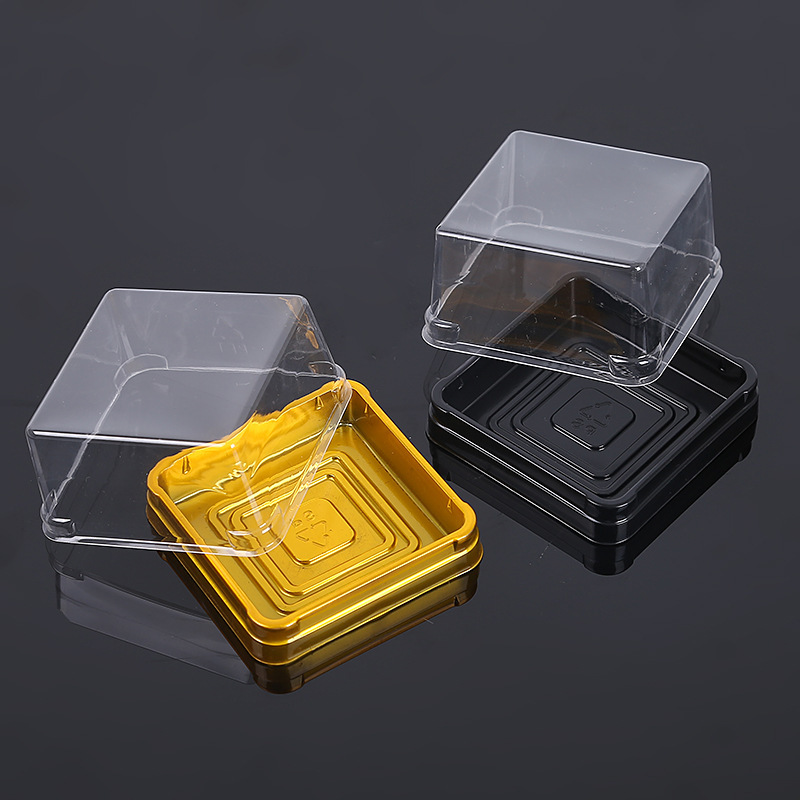
Mastering proper bakery insert tray design prevents catastrophic transit failures. Precision starts well before manufacturing. You must evaluate the necessity of 3D scanning. Custom tooling relies on exact digital models to match complex items.
Follow these steps to establish optimal clearance:
Scan the Product: Capture the exact 3D contours of the freshly baked item.
Map Swell Rates: Account for natural expansion or contraction post-baking.
Define the Grip Zone: Design the cavity base to hold the heaviest part tightly.
Design the Release Angle: Ensure walls remain loose enough for easy consumer removal. You never want a customer destroying a cupcake while pulling it out.
Round or completely symmetrical items pose a unique challenge. They love to spin inside smooth cavities. Spinning destroys delicate frosting details. It also smears chocolate drizzles against the plastic walls.
You can prevent this by integrating anti-rotational features. Consider adding fluted walls to the design. Flutes gently grab the textured edges of muffins or tarts. Corner locks work exceptionally well for square brownies. Base indentations anchor heavier items from the bottom up. They stop rotation before it even starts.
Kinetic energy travels directly from the outer box into your pastry. You must intercept it. Strategic structural ribbing dissipates this energy quickly.
Engineers place structural ribs strictly between individual cavities. These ribs act like tiny crumple zones. They absorb the shock of a dropped box. Furthermore, implementing raised base platforms creates critical isolation. The platform suspends the product. It isolates the pastry from direct impacts against the bottom carton wall.
Plastics dominate the packaging sector for a reason. Thermoforming offers incredible precision and structural integrity. Polyethylene Terephthalate (PET) remains the industry favorite. A premium PET Mooncake Tray perfectly demonstrates this capability. Mooncakes are dense, heavy, and oily. They demand superior dimensional stability to prevent tray warping. PET provides unbeatable grease resistance. It also delivers crystal-clear display properties for high-end retail environments.
You might also consider RPET for sustainability goals. RPET incorporates recycled content. However, be aware of structural trade-offs. Recycled plastics can occasionally exhibit minor brittleness. You may need to increase the plastic gauge slightly to maintain strength.
Cellulose-based inserts offer a different set of advantages. Paperboard excels in moisture management. It naturally wicks condensation away from freshly baked breads.
Plastics can trap moisture, turning crispy crusts soggy. Corrugated partitions handle freezer-to-thaw cycles beautifully. They maintain structural integrity even when slightly damp. However, paperboard generally offers less visual transparency. It absorbs shock through deformation rather than rigid deflection.
Material Characteristics Overview
Material Type | Shock Absorption Method | Moisture Control | Display Clarity | Ideal Application |
|---|---|---|---|---|
Standard PET | Rigid deflection | Low (traps moisture) | Excellent (Crystal Clear) | Dense, oily pastries (Mooncakes) |
RPET | Rigid deflection | Low | Very Good | Eco-conscious retail lines |
Paperboard | Material deformation | High (wicks moisture) | Opaque | Artisan breads, warm pastries |
Corrugated | Crush zones | Moderate | Opaque | Heavy bulk shipping |
Material selection goes beyond physical protection. It directly impacts consumer health. You must verify all materials comply strictly with FDA and GFSI standards.
Evaluate surface textures carefully. Smooth surfaces resist bacterial harborage better than porous ones. If you employ reusable transit trays, assess them against commercial sanitization protocols. Materials must endure harsh chemical washes and extreme temperature shifts without degrading.
Beautiful designs fail if they halt the production line. Inserts must remain completely stable on high-speed bakery conveyor systems. A lightweight tray might slip or warp under robotic loading pressure.
Engineers must design a robust outer lip. This lip gives conveyor belts a reliable edge to grip. It also provides robotic suction arms a flat, stable target. If the tray bends during picking, the robot drops the pastries.
Trays ship nested tightly together to save warehouse space. They must separate easily on the packing line. Vacuum suction often binds poorly designed trays together.
You must specify anti-jamming lugs in your design. These tiny physical bumps create a micro-gap between stacked trays. Additionally, draft angles matter immensely. Engineers typically utilize a 5–7 degree draft angle on cavity walls. This ensures a single Bakery Insert Tray drops cleanly from automated denesting equipment. Without these features, operators face constant machinery jams.
An internal insert never works alone. You must map the exact fitment between the tray and the outer master carton. Precision here is non-negotiable.
A loose fit entirely negates your internal cavity protection. If the entire tray slides back and forth inside the box, the pastries still suffer impact damage. The outer perimeter of the insert must sit flush against the corrugated walls. This locks the entire internal payload securely in place.
Distributors operate in highly competitive markets. Premium, movement-resistant inserts provide a distinct, undeniable selling proposition. Distributors can confidently promise higher retail yields to their downstream clients.
Better shelf presentation directly increases sales velocity. When distributors deliver pristine baked goods, bakeries reorder faster. A well-engineered tray becomes a powerful sales tool. It proves to retail buyers you care about their visual merchandising standards.
Never commit to a full production run without physical validation. You must establish strict criteria for requesting structural prototypes.
Request CAD Samples: Ask for unprinted, machine-cut prototypes first.
Conduct Payload Tests: Insert real, baked products into the cavities to check tolerances.
Simulate Transit: Perform drop-testing on the fully loaded master carton.
Verify Automation: Run the prototypes through your denesters to confirm smooth operation.
Mitigating product movement is a measurable engineering challenge. It is never an unavoidable cost of doing business. You hold the power to stop transit damage through precise, intentional design.
The most effective structural layouts balance precise cavity engineering with line-speed automation requirements. You must respect both the physical pastry and the packing machinery.
Take immediate action today. Audit your current damage rates across all shipping lanes. Request custom thermoformed or die-cut prototypes designed specifically for your most vulnerable SKUs. Upgrading your internal packaging framework secures your product, protects your brand, and ultimately defends your bottom line.
A: The ideal draft angle typically falls within the standard 5-to-10-degree range. This precise angle proves necessary for two reasons. First, it ensures successful release from the thermoforming mold. Second, it allows automated denesting machinery on the packaging line to drop trays cleanly without jamming.
A: A mooncake tray requires significantly tighter base-locking tolerances and higher overall rigidity. This supports the dense weight and high oil content of traditional mooncakes. In contrast, a standard cupcake insert prioritizes taller, wider anti-smudge clearance above the base to protect delicate top frosting from sticking.
A: Yes, they absolutely can. Smart internal cavity contouring and nesting designs optimize the existing space. Engineers shape the inner walls to hug the product. This approach often maintains or even reduces the outer master carton size while drastically improving physical transit protection.
A: We strongly recommend utilizing industry-standard ISTA (International Safe Transit Association) testing protocols. You should conduct comprehensive vibration testing and rotational drop tests. Always execute these tests using live product payloads to observe how real pastries react to actual supply chain forces.


