
Views: 0 Author: Site Editor Publish Time: 2026-09-30 Origin: Site


Securing reliable packaging for delicate, perishable goods requires balancing unit economics with strict supply chain timelines. You need protective solutions to shield fragile pastries without disrupting your seasonal delivery schedules. For bakery procurement teams, miscalculating packaging lead times means either costly stockouts or bloated warehousing costs. A delayed shipment halts your bakery production lines, leaving highly valuable inventory vulnerable to spoilage and loss.
Effectively planning your minimum order quantities (MOQ) and production schedules requires understanding tooling constraints, material choices, and freight variables. This guide provides a procurement-focused framework for mapping out your packaging timeline and evaluating suppliers. You will discover practical strategies to streamline vendor communication, navigate production bottlenecks, and secure premium presentation for your baked goods. By mastering these variables, you ensure fresh products reach consumers in flawless condition.
The earliest phase of securing your packaging dictates the entire downstream schedule. You must differentiate timelines between off-the-shelf molds and custom cavity designs. Off-the-shelf options represent the fastest path to market. Manufacturers already hold these molds in their facilities. They bypass the engineering phase entirely. Conversely, custom designs require significant upfront work. Engineers must draft CAD models. They program CNC machines to cut aluminum molds. This custom tooling process naturally extends your lead time.
You face significant risks if tooling modifications become necessary after the initial design. Always allow a minimum of one week for physical sample approval. Do not rely solely on digital renders. You need to test a physical macaron blister tray with your actual baked goods. Macarons vary slightly in moisture and spread. A physical test ensures the domes lock correctly without crushing the delicate crusts.
Best Practice: Build a two-week safety buffer into your tooling phase. If the first physical sample crushes the macaron shells, the factory needs time to adjust the mold's draft angles before mass production begins.
Once you approve the physical sample, mass production begins. However, raw material availability heavily dictates production speed. Manufacturers do not keep infinite rolls of plastic sheet inventory. They order raw PET resin based on client commitments. If local resin suppliers experience delays, your thermoforming schedule slips.
Thermoforming production schedules also fluctuate based on seasonal bakery demands. Factories experience massive capacity constraints during Q4 holiday surges. In October and November, global packaging demands peak. Machines run at maximum capacity. During these windows, a standard two-week production run easily stretches to four weeks. You must forecast your holiday inventory well in advance to avoid these seasonal bottlenecks.
Common Mistake: Assuming mass production scales linearly. Ordering 100,000 units does not take ten times longer than ordering 10,000 units. The machine setup takes the most time. Once thermoforming machines calibrate, they produce thousands of trays per hour.
Transit times represent the final and most variable hurdle in your procurement timeline. Your choice of freight drastically impacts both budget and delivery dates. You must weigh the urgency of your inventory against your shipping budget.
| Production Phase | Standard Mold Time | Custom Mold Time | Key Dependency |
|---|---|---|---|
| Design & Prototyping | 0 Weeks | 1-3 Weeks | Sample Approval |
| Mass Production | 1-2 Weeks | 2-4 Weeks | Material Availability |
| Sea Freight Transit | 4-6 Weeks | 4-6 Weeks | Port Congestion |
| Total Estimated Lead Time | 5-8 Weeks | 7-13 Weeks | Forecasting Accuracy |
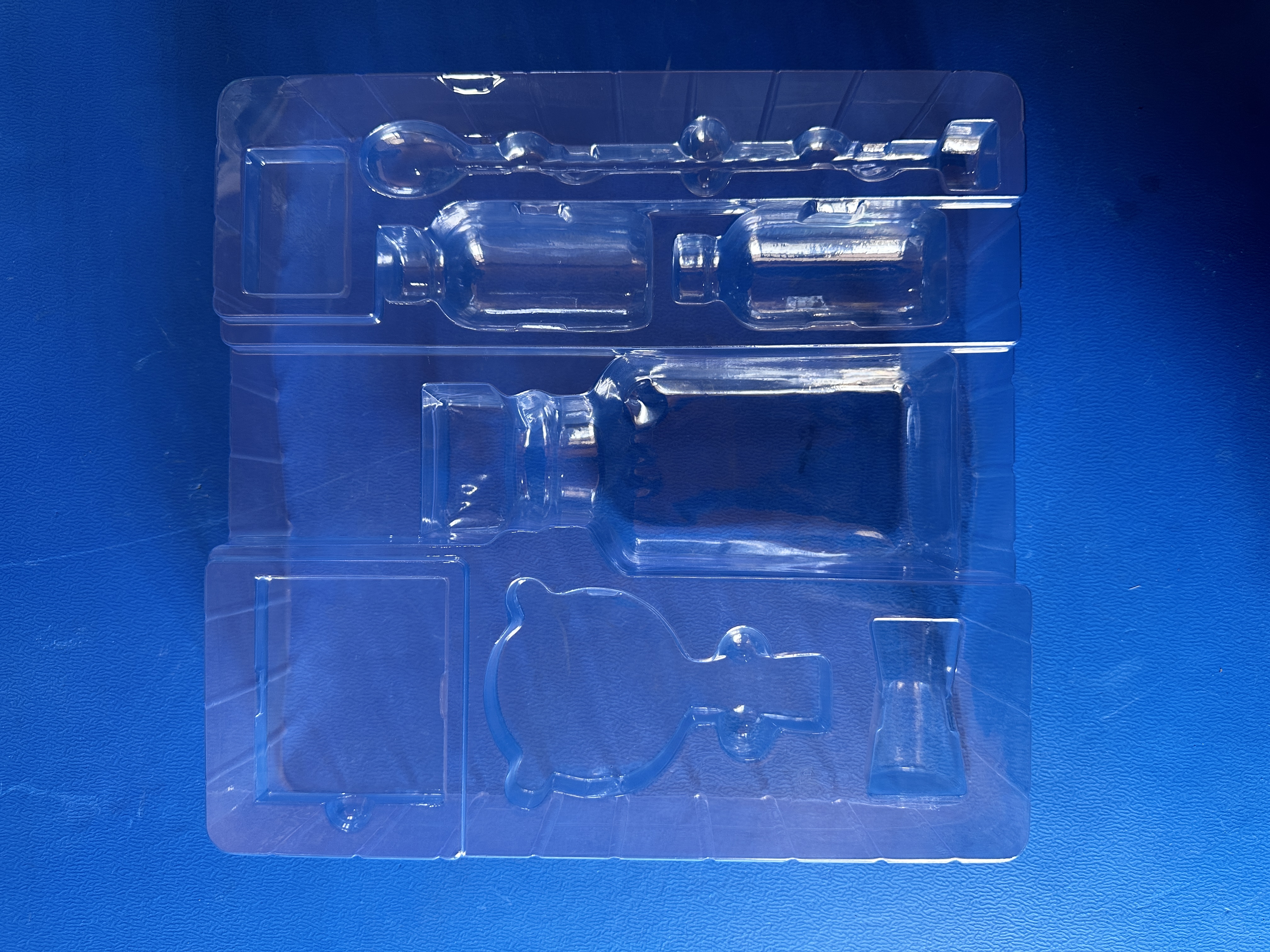
Minimum order quantities rarely exist just to frustrate buyers. They stem directly from machine setup time and energy costs. Manufacturers must heat massive thermoforming machines to exact temperatures. They must calibrate the pressure for specific mold cavities. This setup process wastes raw material and consumes expensive electricity before a single perfect tray emerges.
Because of these hard costs, manufacturers force higher MOQs for custom-molded trays. They must amortize the lost setup time and wasted energy across a larger production run. If you use a standard stock mold, the factory often groups your order with other clients. This shared production run allows them to offer much lower MOQs. If you demand a highly unique shape, you bear the entire setup burden alone.
Material selection heavily influences your required order volumes. You must contrast food-grade packaging requirements with industrial alternatives. Industrial applications tolerate lower visual standards. Unlike hardware blister packaging—which often uses standard, cheaper PVC and tolerates minor scuffing—food packaging demands perfection. Hardware blisters prioritize tear resistance over aesthetics. Food packaging prioritizes visual appeal and strict regulatory safety.
For premium pastries, you need an optical high clarity pet blister tray. This material requires pristine manufacturing environments. It requires specific minimum resin runs to ensure a flawless, retail-ready finish. If a manufacturer needs to source specialized anti-fog, high-clarity PET resin just for your order, they will pass the resin supplier's MOQ directly onto you. High-clarity PET cannot be mixed with lower-grade recycled plastics without causing visual clouding, which ruins the display value of colorful macarons.
Procurement teams must carefully balance unit cost against cash flow. High-volume orders secure steep discounts. However, they tie up crucial working capital. They also consume expensive warehouse space. You need a framework for calculating the true "holding cost" of your inventory.
Consider the difference between ordering 50,000 units and 10,000 units. Ordering 50,000 units might drop your unit cost by 30%. However, lightweight blister trays ship fully formed. They occupy massive amounts of pallet space. Storing 50,000 trays for six months incurs monthly warehousing fees. It risks dust accumulation. It risks accidental forklift damage.
Conversely, ordering 10,000 units incurs a higher unit cost. Yet, it preserves your cash flow. It frees up capital for marketing or ingredients. It reduces your storage footprint. You must calculate whether the warehouse fees over six months exceed the savings gained from the bulk discount. Often, paying a slightly higher unit price for a smaller MOQ yields better overall financial health for growing bakeries.
Vague requests lead to endless email chains and delayed quotes. Establishing your exact macaron blister tray specifications before contacting vendors eliminates guesswork. Clear technical briefs allow factories to immediately check their stock molds or accurately price a custom tool.
Exact sizing prevents movement during transit. Macarons feature incredibly fragile outer shells. If a cavity measures 5.0cm but your pastry measures 4.5cm, the product rattles. This rattling shatters the crust before the customer opens the box. Exact sizing reduces these damage rates significantly.
However, extreme precision impacts mold complexity. The mold must account for the plastic sheet's shrinkage after heating. You must specify your macaron's exact diameter and maximum height. Provide a tolerance range (e.g., 4.5cm ± 2mm). This allows the engineering team to design locking mechanisms that gently hold the pastry without applying crushing pressure to the dome.
You must specify the optimal gauge for your trays. Typical food packaging utilizes thicknesses ranging from 0.3mm to 0.5mm. Material thickness dictates both protection and price.
A standard 0.4mm gauge usually provides the perfect balance. It offers sufficient rigidity for retail display while keeping freight costs manageable.
Food safety remains non-negotiable. Your specifications must strictly mandate BPA-free materials. They must demand FDA or EU compliant plastics. Do not assume a factory uses food-safe materials by default. You must put this requirement in writing.
Clearly documented specifications streamline the quotation and approval process. When you request a quote, include a demand for material safety data sheets (MSDS) and compliance certificates. Reputable manufacturers keep these documents on hand. They will provide them instantly. This step protects your brand from liability and ensures your packaging meets global retail standards.
Not all vendors manage supply chains with equal transparency. A professional macaron blister tray supplier will offer a clear "lead time menu." This menu should detail distinct timelines for standard production, expedited runs, and guaranteed delivery dates.
Evaluate how they present these options. Do they clearly outline the extra costs associated with rushing an order? Do they separate the one-time tooling costs from the recurring unit costs? Clear pricing structures indicate a mature manufacturing partner.
Red Flag: Beware of suppliers promising custom tooling and final delivery in under two weeks. Unless they explicitly include massive air-freight surcharges in their quote, this timeline is physically impossible for overseas production. They are likely overpromising to win your deposit. Once they have your funds, the schedule will inevitably slip, leaving you without packaging during critical sales windows.
Your supplier must grow with you. Assess their ability to maintain visual consistency across high-volume runs. Over long production cycles, thermoforming molds accumulate micro-debris. Machines fluctuate in temperature. These factors cause cloudiness in the PET material.
Ask potential partners about their quality control procedures. How frequently do they pull trays off the line for visual inspection? You need a partner who discards cloudy trays before they reach your shipping container. Furthermore, verify their claim processing policies. Ask what happens if you receive defective units or experience delayed shipments. A trustworthy supplier offers a clear protocol for crediting your account or replacing damaged goods without hostile negotiations.
Strategic procurement of macaron blister trays hinges on aligning your cash flow limits with your inventory burn rate. By mastering the variables of MOQ and lead time, you protect your delicate pastries while optimizing your operational budget. The balance between upfront cost and long-term storage defines successful packaging procurement.
Take immediate action by finalizing your internal macaron dimensions. Decide firmly whether a stock mold fits your brand, or if custom tooling justifies the longer lead time. Finally, approach short-listed manufacturing partners with strict specifications, demanding a detailed tooling-to-delivery timeline before you sign any purchase orders.
A: Typically, manufacturers require 10,000 to 20,000 units for custom molds to justify machine setup and tooling costs. Standard molds, however, often start much lower, usually around 5,000 units, because factories can group these runs with other clients.
A: Adding custom printed sleeves or embossed logos directly into the plastic tray adds one to two weeks to the prototyping phase. The factory must create specific physical stamps or align printing plates, requiring extra approval cycles before mass production.
A: Yes. PET provides superior optical clarity to showcase pastel colors. It is highly recyclable and universally accepted for direct food contact. Unlike many PVC variants, PET does not release harmful chemicals and meets strict global food safety regulations.


