
Views: 0 Author: Site Editor Publish Time: 2026-09-01 Origin: Site


Walking past a bakery display, consumers expect absolute perfection. Achieving this pristine presentation relies heavily on complex, unseen structural mechanics. Inadequate packaging routinely leads to compromised product integrity behind the scenes. It causes increased shrink, excess daily waste, and highly inefficient use of valuable retail space. We know aesthetic appeal attracts buyers instantly. However, visual charm must never compromise structural reliability during harsh transit routes and daily merchandising. Flimsy domes or weak bases destroy margins before a product even reaches the consumer.
This article provides a robust commercial evaluation framework for bakery operators. You will learn how to systematically select optimal packaging for your business. We break down critical criteria based on structural engineering, material performance, and operational scalability. Read on to master the exact features necessary to safeguard your delicate bakery inventory.
Interlocking lid-to-base features are non-negotiable for safe vertical merchandising.
Perimeter sealing mechanisms dictate both shelf-life extension and tamper deterrence.
Material rigidity (tray thickness) must align with the weight-bearing requirements of dense or multi-tiered cakes.
Testing packaging under real-world transport conditions prevents catastrophic failures in the last mile.
Bakery operators often underestimate the ripple effects of poor packaging choices. Structural failures create compounding problems across daily operations. These issues extend far beyond a single ruined dessert. They actively disrupt logistics and damage brand trust.
Incompatible packaging creates immediate friction in fast-paced commercial kitchens. Poor stacking compatibility limits back-of-house storage capacity. When domes cannot safely nest into the bases above them, you lose critical vertical space. This inefficiency forces staff to store products in single layers. Walk-in coolers fill up quickly. Display case density drops significantly. Operators lose potential sales simply because they cannot display enough inventory. Every cubic inch of retail space holds distinct revenue potential. Packaging must maximize this space, not hinder it.
Physical damage destroys profit margins instantly. A collapsed tier or smeared buttercream ruins a high-value product. Operators must then discard or deeply discount the damaged unit. You must quantify this cost of physical damage objectively. Compare the immediate loss of a thirty-dollar pastry against the fractional cost of upgraded packaging. A premium Cake Container might cost a few cents more per unit. However, it completely prevents devastating icing smears. The math always favors structural reliability.
Direct shrink: Complete loss of unsellable damaged goods.
Labor waste: Time spent scraping, remaking, or repacking ruined items.
Discounting: Selling visually flawed items at break-even prices.
Consumers judge your brand by its outermost layer. Secure, tamper-evident sealing correlates directly with consumer trust. Buyers want absolute confidence in product hygiene. If a lid pops open easily, customers question the freshness. They also worry about potential contamination. A sturdy, sealed container signals quality and professionalism. It proves you care about the product journey from the oven to their kitchen table.
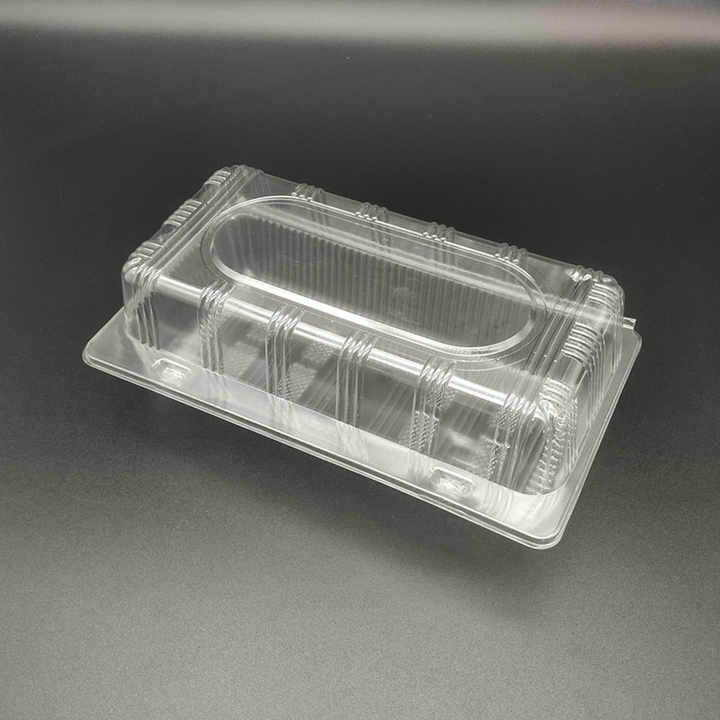
Scalable retail operations require highly engineered packaging. You cannot stack generic boxes safely in high-volume environments. Effective structural geometry prevents catastrophic inventory avalanches.
Look closely at how the top dome aligns with the base footprint of the unit above it. True interlocking architecture requires recessed lids. These indentations lock stacked units firmly in place. They prevent dangerous lateral sliding during movement. A proper cake container stacking design ensures the top tray nests securely into the dome below it. This friction fit allows staff to carry three or four units simultaneously. It also protects displays from toppling when a customer bumps the pastry case.
You must define the maximum vertical pressure a dome can withstand before buckling. Domes carry the entire weight of the stacked products above them. We see two primary design approaches here. Ribbed domes offer higher rigidity. The fluted structural lines act like tiny columns. They bear significant weight easily. Smooth domes provide better product visibility. However, they inherently possess lower vertical strength. Operators must balance visual clarity against required stacking height.
Dome Design Type | Visual Clarity | Stacking Strength | Best Use Case |
|---|---|---|---|
Deep-Ribbed Profile | Moderate | High (Up to 4 tiers) | Wholesale transport, heavy cakes |
Lightly Fluted | Good | Medium (Up to 3 tiers) | Standard retail shelves |
Completely Smooth | Excellent | Low (1-2 tiers max) | Premium single-tier display |
Evaluate the base width relative to the dome height. A tall, narrow dome creates a high center of gravity. This geometry increases tip-over risk significantly. A properly engineered design minimizes this risk during transit and high-traffic display. Wider bases provide essential grounding. They distribute the weight evenly across the shelf or transport pallet. When transporting tall creations, a wide-flange base acts as a crucial stabilizing anchor.
A container is only as good as its closure system. Air exposure degrades baked goods rapidly. Weak seals allow moisture loss, accelerating the staling process. Advanced closures prevent this completely.
High-volume bakeries require rapid, foolproof packaging lines. Tactile and auditory feedback is crucial here. An audible "click" confirms a complete perimeter seal. Staff working in noisy kitchens rely on this sound. It eliminates second-guessing. Without a clear snap-lock, employees might leave a corner unsealed. Air enters the package, and the sponge dries out prematurely. The modern Clamshell Bakery Box integrates multiple snap points along the edge to guarantee closure alignment.
Extended edges do much more than hold the lid shut. They act as environmental barricades. You should analyze how these flanges prevent air ingress. A tightly locked perimeter maintains internal humidity effectively. It prevents early staling. Most importantly, it achieves this without relying on secondary shrink bands. Removing shrink bands speeds up production. It also reduces plastic waste.
Moisture retention: Traps ambient humidity to keep sponges soft.
Odor blocking: Prevents cakes from absorbing savory smells in shared coolers.
Structural bridging: Reinforces the overall rigidity of the closed container.
Security compliance drives modern packaging decisions. Consumers actively look for unbroken seals. You must review available options for tamper evidence. Built-in tear strips offer a sleek, highly secure solution. Once torn, the strip permanently alters the container. Manual stickering provides a cheaper upfront alternative. However, you must weigh ongoing labor costs against this method. Applying stickers by hand slows down assembly lines. Built-in tear strips cost slightly more per unit but save thousands in annual labor hours.
The foundation of any structural package lies in its raw material. Base stability dictates whether a heavy dessert survives the journey from the counter to the car.
Material chemistry dictates performance. Polyethylene Terephthalate (PET) and Oriented Polystyrene (OPS) dominate the market. You must compare them critically.
PET offers high clarity and superior crack resistance. It flexes slightly under pressure without shattering. This makes it ideal for heavy items. It easily handles the freezing and thawing cycles common in commercial bakeries.
OPS provides a highly cost-effective alternative. It works well for lightweight items. However, OPS becomes prone to brittleness under heavy loads. If you drop an OPS tray, it often shatters. Cold temperatures exacerbate this brittleness.
Material Type | Clarity Level | Impact Resistance | Cold Temp Durability |
|---|---|---|---|
PET (Polyethylene Terephthalate) | Crystal Clear | Excellent | High (Freezer Safe) |
OPS (Oriented Polystyrene) | Good | Low (Brittle) | Poor (Prone to cracking) |
Base bowing remains a critical risk for heavy, dense cakes. When a customer lifts a flimsy base with one hand, the plastic bows downward. The center drops, and the icing cracks down the middle. This ruins the presentation instantly. Heavy cakes require reinforced, corrugated-style plastic bases. These bases feature geometric ridges molded into the bottom. These ridges add structural tension. They prevent the tray from buckling when lifted unilaterally. Always check the gauge thickness of the base tray before ordering in bulk.
Baked goods release complex fats and moisture. Buttercreams and oil-based sponges break down inferior materials over time. You must ensure the base material does not degrade or warp. A standard 3-to-5-day shelf life exposes the plastic to constant grease contact. Low-quality plastics can leach or soften. Professional-grade PET resists aggressive fats completely. It maintains its structural integrity from the moment of packaging until the final slice is served.
Selecting the right container requires a methodical approach. Do not buy based on aesthetics alone. Follow a structured procurement process to align packaging capabilities with your specific operational demands.
Step 1: Define Cake Specifications. Categorize your entire inventory by weight, base diameter, and frosting type. Whipped cream requires significantly higher dome clearance than smooth fondant. Dense mud cakes demand thicker base trays than light angel food cakes. Map these metrics precisely before looking at catalogs.
Step 2: Map the Supply Chain. Identify the exact transit distance for your products. Local consumer pickup allows for standard snap closures and medium-gauge plastics. Conversely, wholesale distribution requires maximum durability. Palletized shipping demands high-gauge interlocking features to survive truck vibrations.
Step 3: Sample Testing Protocol. Establish a rigid baseline test in your kitchen. Order samples and load them with real product. Stack these containers to your maximum desired display height. Leave them in the cooler overnight. Then, simulate transport vibration by driving them across town. Inspect for icing smears or seal failures upon return.
Step 4: Cost-to-Value Analysis. Weigh the upfront unit cost of a premium container against the projected reduction in damaged goods. Track your current weekly product loss due to packaging failures. Upgrading your containers usually pays for itself by saving just a few dropped or smashed items per week. Focus on functional value rather than chasing the lowest unit price.
Mastering retail bakery packaging requires a strict balance. You must harmonize visual visibility, robust structural stacking design, and airtight sealing mechanisms. Flimsy containers might save pennies upfront, but they hemorrhage dollars through product loss and operational friction. A properly engineered dome protects delicate icing while maximizing shelf space.
Operators must recognize packaging as a critical operational asset. It is not just a disposable consumable expense. It serves as the final protective barrier and the primary merchandising tool for your brand. High-quality materials like PET ensure stability, while secure snap-locks guarantee freshness.
Your next step is simple and actionable. Audit your current damage rates and cooler storage density. Then, order sample kits from verified manufacturers. Conduct rigorous in-house load and seal testing using your heaviest products. Let the physical data guide your final procurement decisions.
A: Weight capacity varies heavily based on the plastic gauge and dome geometry. A standard 10-inch commercial container typically holds between 3 to 6 lbs per unit before dome deflection occurs. Deep-ribbed PET designs push toward the higher end of this scale, while smooth OPS domes support much less weight.
A: Clamshells feature an attached hinge. They provide excellent stability for quick-service environments and lighter cakes. However, two-piece models offer reinforced base-and-dome security. A separate, heavy-duty base tray provides superior rigidity, making two-piece designs essential for supporting heavy, dense, or multi-tiered cakes safely.
A: Condensation occurs due to rapid temperature differentials, such as moving a cake from a walk-in cooler to an ambient display. While tight seals trap moisture, they do not create condensation independently. For highly temperature-sensitive icings, utilize micro-vented dome designs. These vents allow slow acclimation, preventing water droplets from forming.


