
Views: 0 Author: Site Editor Publish Time: 2026-09-10 Origin: Site


Securing a physical sample is only the first step in the procurement process. Assuming a single prototype guarantees bulk production quality represents a critical risk for your business. Before committing capital to high-volume manufacturing, procurement and packaging teams need empirical data. You must test samples against real-world stressors, automated assembly lines, and strict compliance standards. A simple visual check will not reveal hidden structural flaws or automation incompatibilities.
This guide provides a standardized evaluation matrix to help you objectively compare packaging samples. We will explore practical ways to measure physical tolerances and run functional performance tests. You will learn how to mitigate scaling risks effectively and validate supplier claims. By implementing these testing frameworks, you ensure a smoother transition from prototype approval to mass production before signing off on a bulk order.
Verify against engineering constraints: Always measure physical samples against agreed-upon CAD drawings and technical specifications.
Stress-test for reality: Evaluate structural integrity, denesting efficiency, and seal reliability, not just shelf-appeal.
Differentiate tooling types: Understand whether your sample was created using prototype tooling (CNC/3D printed) or production-grade tooling, as this impacts final bulk quality.
Audit the source: A perfect sample is useless if the supplier lacks the quality control infrastructure to replicate it consistently at scale.
Before testing functional performance, you must establish a baseline. You need to ensure the physical prototype matches the approved digital designs. Minor deviations during the sampling phase often multiply during mass production. We recommend starting with a rigorous dimensional inspection.
Measure the sample thoroughly using digital calipers. You must compare these physical measurements directly against the original CAD file. Check the overall length, width, and specific cavity tolerances. Pay special attention to the draw depth. Inaccurate draw depths can prevent your product from seating correctly inside the cavity. Even a millimeter of variance can ruin automated insertion processes on a high-speed line.
Thermoforming stretches plastic over a mold. This process inherently changes the thickness of the final part. You should assess the starting gauge of the plastic sheet versus the finished thickness of the formed sample.
Look carefully for excessive thinning in the corners or deep cavities. Thinning is a very common thermoforming defect. It severely compromises structural integrity. If you press lightly on a deep corner and it collapses, the manufacturer likely used an incorrect starting gauge or improper heating controls. You must request corrections before approving the mold.
Plastic resins look identical to the naked eye. You must ensure the plastic matches your exact requested specifications. For example, verify if the sample uses virgin PET or recycled rPET. If your product requires strict hygiene controls, request material safety data sheets (MSDS). You should also demand food or medical compliance certificates. Do not assume regulatory compliance based on appearance alone.
Common Baseline Inspection Metrics
Inspection Area | Tool / Method | Acceptance Criteria |
|---|---|---|
Dimensional Size | Digital Calipers | Within ±0.015" of CAD file |
Wall Thickness | Ultrasonic Thickness Gauge | No less than 40% of starting gauge |
Material Grade | MSDS / Supplier Certificate | Matches requested resin type |
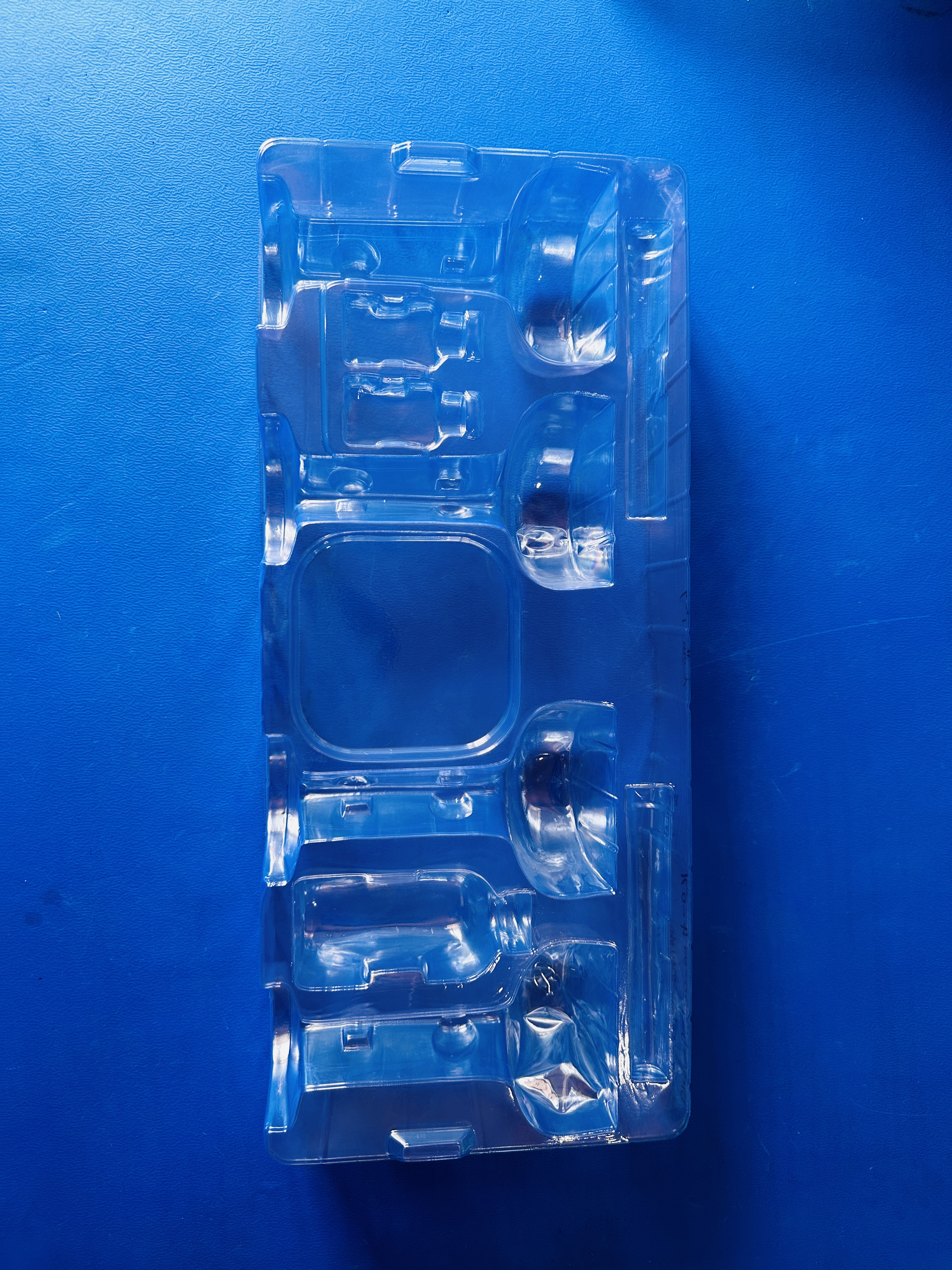
Once you verify the physical dimensions, you must test how the PET blister packaging behaves under real-world conditions. A sample might look perfect on a desk. However, it can easily fail during shipping or handling. We rely on functional stress tests to uncover hidden vulnerabilities.
You cannot test an empty package accurately. Place the actual product inside the sample and simulate transit drops. We recommend following standard ISTA (International Safe Transit Association) drop protocols. Drop the packaged product on its corners, edges, and flat faces.
After the drops, inspect the plastic carefully. Assess the sample for stress whitening, cracking, or cavity deformation. Apply direct downward pressure to simulate pallets stacking on top of the product. If the cavity caves in and transfers force to the enclosed product, the design needs structural reinforcement.
Closure mechanisms dictate the security of your final product. Testing protocols differ based on your chosen packaging style.
Trapped blisters or face-seal packaging: Test the flange flatness rigorously. The flange is the flat outer edge of the plastic. It must remain perfectly flush. A warped flange will not heat-seal evenly to the backing card. Uneven seals create channel leaks, allowing moisture or dirt to enter.
Clamshells: Cycle the hinge and locking buttons 10 to 15 times. Assess the friction and the audible closure snap. The buttons should hold firmly. Evaluate the risk of premature popping during transit. If the undercuts on the buttons are too shallow, vibrations will force the clamshell open.
Temperature fluctuations expose hidden flaws in plastic packaging. Subject the sample to extreme temperature variations. Place it in a commercial freezer for 24 hours, then transition it to a hot, humid environment. Check for warping or brittleness. PET can become susceptible to shattering in extreme cold. If your product moves through a cold-chain distribution network, you must ensure the selected material grade withstands freezing temperatures without cracking.
Scaling up introduces entirely new challenges. A single tray behaves differently than a stack of ten thousand trays. You must evaluate how the design supports high-volume manufacturing and logistics. Ignoring scale factors usually leads to massive production bottlenecks.
Automated lines require trays to feed quickly. Test how easily stacked trays separate from one another. High friction or vacuum-locking between trays will jam automated pick-and-place machinery immediately. When plastic parts nest too tightly, air cannot escape, creating a vacuum seal.
Look for integrated denesting lugs in the custom design. Denesting lugs are small indentations or protrusions. They prevent the trays from sliding completely inside one another. Without these anti-jamming features, operators will spend hours manually prying trays apart, destroying production efficiency.
Logistics efficiency depends on nesting depth. Calculate the nesting ratio of the sample. Tighter nesting reduces the overall pallet volume. When you fit more empty trays onto a single pallet, you directly lower warehousing requirements and freight costs for bulk orders. However, you must balance tight nesting against the denesting risks mentioned above. The sample should represent the perfect compromise between shipping density and easy separation.
Watch how quickly operators or robots can populate the custom cavities. The cavities should feature slight drafts (angles) to guide the product into place. If the product requires forceful micro-adjustments to sit flat, the cavity is too tight. Poor ergonomics slow down human operators and cause robotic arms to misfire. The sample must allow for fluid, frictionless packing.
Consumers judge your product based on its visual presentation. You choose pet blister packaging primarily for its high visibility. You must scrutinize the aesthetic qualities of the sample just as harshly as its structural mechanics.
Inspect the sample under harsh, direct lighting. Look for cloudiness, embedded dust, or burn marks. Cloudiness often indicates poor heating controls during the thermoforming process. Embedded dust suggests the manufacturer operates an unclean facility. Burn marks or yellowish tints show the plastic stayed on the heating platen too long. The final sample should remain crystal clear, offering an unobstructed view of the product inside.
Production molds can leave ugly artifacts on the finished part if designed poorly. Inspect the sample for unwanted aesthetic defects.
Chill marks: Look for unwanted ridges on the plastic. These occur when the heated plastic touches a cold mold too quickly, freezing the material unevenly.
Webbing: Search for folded or wrinkled plastic between closely spaced cavities. Webbing happens when too much material bunches up in a tight area. It looks unprofessional and creates weak points in the tray.
Trimming errors: Check the outer cut lines. The edges should feel smooth and uniform, without jagged plastic burrs.
Trays and clamshells rub against each other during transit. Simulate friction from shipping boxes. Rub two samples together to see how easily the front face scuffs. Excessive scuffing degrades retail presentation significantly. If the sample scratches too easily, you might need to ask the supplier for an anti-scratch coating or slip-agent additive before approving the mass production run.
A flawless sample holds no value if the manufacturer cannot reproduce it ten thousand times. You must look beyond the plastic itself and evaluate the company producing it. Supplier validation prevents supply chain disasters.
You must clarify exactly how the supplier made your sample. Suppliers often create initial samples using single-cavity prototype molds. These prototype tools utilize CNC-machined wood, resin, or soft aluminum. They lack water-cooling channels. As a result, prototype samples will have different tolerances and shrinkage rates than parts ejected from multi-cavity, temperature-controlled production molds. Never assume a prototype perfectly mirrors a mass-produced part.
Ask the supplier to explain their quality control methodology. Request their Acceptable Quality Limit (AQL) standards for mass production. You need to know how many defective units they tolerate per batch. A reliable partner will gladly share their internal inspection checklists. They should clearly define what constitutes a major defect versus a minor defect. If they cannot produce formal QC documentation, they likely lack the discipline required for high-volume manufacturing.
Evaluate their true capacity to transition from sample approval to full bulk manufacturing. A supplier might deliver a sample in three days but require three months for a bulk run. Confirm the exact production tooling timelines. Establish clear expectations regarding minimum order quantities (MOQs). Finally, discuss their raw material supply chain stability. Ensure they have secure access to the required plastic resin grades, preventing unexpected delays when you place your largest orders.
Comparing samples remains a crucial exercise in risk management. By moving beyond simple visual checks and rigorously testing dimensional specifications, machine compatibility, and structural limits, you protect your production line from costly delays. Every test you perform now saves thousands of dollars in rejected parts later.
Your next action is to compile the data from your physical tests. Address any functional failures immediately and request minor tooling adjustments if necessary. Most importantly, always require a "first article inspection" (FAI) directly from the multi-cavity production mold before you authorize the final bulk run. This final check guarantees your mass-produced packaging performs exactly as intended.
A: Typically, thermoforming tolerances range between ±0.010" to ±0.015". This variation depends heavily on the starting material thickness and the specific part geometry. You should tighten these dimensional expectations significantly if you plan to use high-speed automated assembly lines, as robots cannot adapt to large variations.
A: Brittleness generally results from incorrect heating parameters during the thermoforming process. It can also stem from using a sub-optimal material gauge for a deep draw. Additionally, utilizing lower-grade recycled PET instead of standard virgin PET or PETG often reduces the structural flexibility of the final part.
A: Yes. If your project involves high-speed automated packing or strict medical and food compliance, paying for a production-tooled sample (First Article) is highly recommended. It eliminates the unpredictable variables associated with temporary prototype molds, ensuring your bulk order matches the sample exactly.


