
Views: 0 Author: Site Editor Publish Time: 2026-10-01 Origin: Site


Fresh produce packaging faces a critical balancing act between protection and presentation. The modern supply chain demands solutions resilient enough to survive cross-country transit yet appealing enough for retail display. Margins remain tight across the agricultural sector. You need every logistical advantage available to protect your harvest.
The packaging choice directly impacts transit shrinkage, retail shelf life, packing line efficiency, and FDA compliance. Misaligned packaging leads to crushed berries, premature spoilage, or costly bottlenecks in automated facilities. Buyers quickly reject pallets showing physical damage or condensation buildup. You must match the container design to the specific crop physiology.
This guide provides an objective, operational comparison between clamshells and produce trays to help packers, distributors, and buyers finalize their packaging strategy. We establish a baseline assumption here. Neither option is universally superior across all categories. The optimal choice depends entirely on specific produce respiration rates, packing line automation capabilities, and retail presentation requirements. You will learn how to evaluate these formats based on speed, cost, and structural performance.
Establish the metrics used to evaluate packaging performance before comparing the two formats. We must set objective standards first. You cannot manage what you do not measure. Evaluating containers requires a holistic view of the entire supply chain journey.
Core Design: These units are single-piece, hinged rigid containers. They feature integrated locking mechanisms like button locks or friction catches. Manufacturers engineer specific ventilation punches directly into the plastic mold. This creates a secure, all-in-one vessel ready for immediate use.
Operational Strengths:
Implementation Trade-offs:
Ideal For: Choose this format for high-margin, highly perishable, or easily bruised items. In these specific categories, crush-protection easily outweighs the individual unit cost. Delicate skins require rigid perimeter walls.
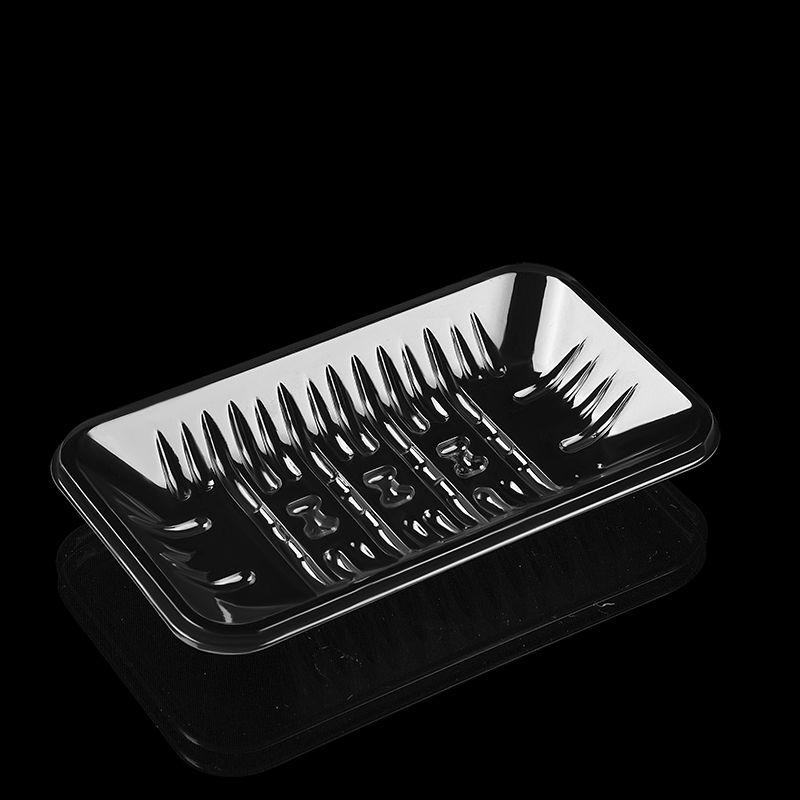
Core Design: These systems consist of flat or shallow-walled bases. Materials include pulp, foam, or PET. They hold produce securely but require a secondary closure. You must apply an overwrap, top seal, or flow-wrap to contain the goods.
Operational Strengths:
Implementation Trade-offs:
Ideal For: They work best for high-volume items. Apples, bell peppers, and mushrooms fit perfectly into these bases. They suit highly automated facilities perfectly. Brands optimizing for minimal plastic usage frequently prefer them.
Evaluating a clamshell vs produce tray configuration requires a close look at cost, speed, safety, and ventilation. You must weigh upfront investments against long-term operational savings.
Cost Analysis:
The hinged format carries a higher per-unit packaging cost. However, it requires much lower CapEx for machinery. You avoid purchasing expensive heat sealers. Conversely, the open base option features a lower per-unit packaging cost. It demands higher CapEx for wrapping or sealing equipment. High-volume operations often recoup this equipment investment quickly through raw material savings.
Automation & Scalability:
Base-and-film systems win easily in high-speed, continuous-motion packing environments. They flow seamlessly down the line. Hinged containers require indexing. They need precise mechanical closing, which slows down the packing line. Mechanical closers struggle at speeds exceeding 120 units per minute. Flow-wrappers easily surpass 200 units per minute.
Safety & FDA Compliance:
Both utilize FDA-approved food-contact materials. Suppliers commonly use virgin or certified rPET. However, trays utilizing top-seal films offer better tamper evidence than standard friction-lock clamshells. Consumers can easily spot a broken film seal. Friction locks can pop open and snap shut without leaving visible evidence.
Ventilation Customization:
Hinged boxes rely entirely on standardized punch holes. You cannot easily adjust them per crop without ordering new molds. Film-sealed bases allow for custom-perforated lidding films. This permits highly precise micro-perforation tailored to the exact respiration rate of the specific crop. You gain superior control over oxygen and carbon dioxide exchange rates.
| Evaluation Metric | Hinged Container (Clamshell) | Base & Film (Tray) |
|---|---|---|
| Unit Cost | Higher | Lower |
| Equipment CapEx | Low (Manual/Simple Closers) | High (Sealers/Flow-wrappers) |
| Automation Speed | Moderate | Very High |
| Crush Protection | Excellent (Self-supporting) | Moderate (Relies on Master Carton) |
| Ventilation Control | Static (Punch Holes) | Dynamic (Micro-perforated Film) |
Moving between formats involves significant logistical hurdles. When shifting your clamshell vs produce tray strategy, evaluate the transition risks carefully. Proper planning prevents expensive production halts.
Assessing Packing Line Downtime: Factor in the time required to install new equipment. You must calibrate top-sealers or flow-wrappers carefully. Technicians must synchronize the sealing head timing. This transition interrupts daily output. Plan these installations during off-peak harvest seasons.
Tooling and Mold Costs: Consider the expenses for ordering custom shapes. Sourcing standardized bases often proves cheaper. Custom molds require expensive aluminum tooling and long design phases. Standardized items sidestep these fees entirely.
Supply Chain Lead Times: Navigate minimum order quantities (MOQs) carefully. Consider your warehouse space limitations. Empty bases nest deeply together. They stack tighter, reducing inbound freight costs compared to clamshells. You fit significantly more units onto a single inbound truck.
Trialing Phase: Never skip the testing period. The necessity of conducting a limited run remains paramount. You must test palletization stability under real-world conditions. Conduct shelf-life testing before authorizing a full rollout. Monitor gas levels inside the package over a standard transit duration.
Follow these implementation steps to ensure a smooth transition:
Choosing the right packaging format dictates your operational efficiency and retail success. Summarizing the baseline decision is straightforward. Choose clamshells for maximum rigid protection and lower equipment CapEx. They protect fragile items brilliantly without requiring expensive sealing machinery. Choose produce trays (especially top-sealed transparent trays) for high-speed automation, lower unit costs, and tailored moisture control. These base-and-film systems dominate large-scale, continuous-motion packing environments.
Your next step requires immediate action. Encourage your buying teams to audit their current packing line constraints. Request sample runs to test structural integrity and film compatibility on existing machines. Consult material suppliers to dial in the exact micro-perforation needed for your specific crop. A data-driven approach to this transition will protect both your margins and your produce.
A: Trays with micro-perforated lidding films generally offer more precise O2/CO2 exchange control than the static punch holes of standard clamshells. You can customize the film perforation to match the exact breathing rate of the crop.
A: While the base tray offers similar rigidity, the top film is vulnerable to puncturing. Structural weight during transit must be borne by the master corrugated carton, not the tray itself. The rigid hinged alternative bears vertical weight much better.
A: No. The FDA regulates the safety of the food-contact material (e.g., specific PET grades) and hygiene standards, not the structural format. Both must be manufactured in food-safe facilities under strict compliance rules.
A: Empty produce trays generally nest closer together than clamshells (which include the hinged lid). This tighter nesting results in more units per pallet and significantly lower inbound freight costs for your facility.


