
Views: 0 Author: Site Editor Publish Time: 2026-10-05 Origin: Site


Selecting packaging materials carries high stakes for modern food brands. You must constantly balance shelf appeal, thermal performance, and strict regulatory compliance. A poor choice can ruin product integrity or severely damage your brand reputation. The core conflict often comes down to choosing between two dominant plastics in the market. You will typically weigh the crystal-clear visibility and rigid structure of PET against the impressive high-heat tolerance and chemical resistance of PP. This vital decision directly impacts how your product looks, survives transit, and performs in consumer kitchens. This article provides an evidence-based framework for technical buyers, procurement teams, and packaging engineers. We will deeply explore the critical differences in PP vs PET food packaging. You will learn how to evaluate material properties, structural formats, and safety compliance to confidently make the best choice for your application.
Clarity vs. Heat: PET wins on transparency (ideal for retail visibility); PP wins on thermal stability (essential for microwavable/hot-fill applications).
Application Fit: PET dominates cold-case foods, while PP dominates hot deli and takeout.
Sustainability: Both are highly recyclable, but PET currently has a more mature, closed-loop recycling infrastructure globally.
Cost Efficiency: PP generally offers a lower density, potentially reducing cost per part, though raw material market fluctuations apply.
Polyethylene Terephthalate represents a gold standard in rigid packaging. You will immediately recognize its glass-like clarity on retail shelves. This aliphatic polyester offers high tensile strength. It resists shattering upon impact during transit. PET also provides an excellent gas and moisture barrier. It effectively blocks oxygen ingress. This property dramatically extends the shelf life of perishable items. We see PET most commonly used in cold or ambient temperature environments. Salads, cold cut meats, and fresh fruits rely heavily on these barrier properties.
Polypropylene is an addition polymer featuring a semi-crystalline structure. This molecular arrangement gives it a significantly high melting point. It handles boiling temperatures easily. PP also boasts superior chemical resistance against aggressive food acids and fats. You can flex PP repeatedly without breaking it. Engineers call this high fatigue resistance. This creates the reliable "living hinge" found on many snap-fit containers. Common use cases strongly point to hot-fill processes. Microwavable meals and high-flex environments demand the rugged nature of PP.
Both materials classify as highly available commodity plastics. However, they present differing densities and processing requirements. PET is noticeably denser than PP. A pound of PP yields more physical volume than a pound of PET. Furthermore, you cannot simply swap one resin for the other in the same mold. They require distinct tooling parameters. These engineering differences heavily impact the unit economics for large-scale production runs.
Structural integrity dictates how well products stack and survive shipping. When evaluating a thermoformed tray, you must test its physical limits. PET provides superior stiffness. It holds its shape perfectly under vertical compression. This stiffness protects fragile foods on crowded retail shelves. PP, conversely, excels in durability over sheer stiffness. It absorbs shocks rather than cracking. PP resists fractures aggressively during rough handling. This trait proves especially valuable during freezer-to-microwave transitions. If a consumer drops a frozen PP tray, it generally bounces rather than shatters.
Visual merchandising directly influences consumer buying behavior. A clear PET blister pack serves as the industry standard for fresh produce and baked goods. Clear clamshell packaging allows shoppers to inspect food quality before purchasing. Product visibility drives retail conversions reliably. PP struggles in this category. Polypropylene possesses an inherent "haze" due to its crystalline structure. It scatters light, creating a milky appearance. This haze limits PP's viability where ultra-high clarity remains a strict marketing requirement.
Temperature dictates material selection more than any other factor. Heat deflection temperatures (HDT) reveal strict physical limits. PET begins to soften and warp around 160°F (71°C). You cannot pour boiling liquids into standard PET containers. PP remains remarkably stable up to 220°F (104°C). This allows safe hot-filling and microwave reheating. Cold-chain realities also diverge sharply. Standard PET becomes brittle at deep-freeze temperatures. It risks micro-cracking during frozen transit. Manufacturers engineer specific PP copolymers to withstand harsh freezer applications.
Material Feature | PET (Polyethylene Terephthalate) | PP (Polypropylene) |
|---|---|---|
Heat Deflection Limit | ~160°F (71°C) | ~220°F (104°C) |
Microwave Safe? | No (Will warp/melt) | Yes (Industry standard) |
Deep Freeze Performance | Can become highly brittle | Excellent (with specific copolymers) |
Hot-Fill Compatibility | Poor | Excellent |
Consumer safety heavily regulates the packaging industry. Securing FDA (US) and EFSA (Europe) food-contact certifications remains mandatory. Both agencies scrutinize how plastics interact with consumables. They evaluate the base polymer alongside all manufacturing additives. Materials must not alter the composition, taste, or odor of the food. Both PET and PP routinely achieve these stringent certifications for direct food contact.
Regulatory bodies mandate strict migration tests. They evaluate leaching under diverse conditions. Labs test plastics against highly acidic foods, fatty foods, and aqueous solutions. They simulate long-term storage and high-temperature stress. PET performs exceptionally well against acidic elements like fruit juices. PP shines when tested against high-fat contents like hot oils and heavy gravies. Both must stay well below the overall migration limit (OML) thresholds set by regulators.
Buyers must understand a critical safety nuance. "Food grade" is never inherent to the resin name alone. Industrial-grade PET or PP exists and contains unsafe slip agents or colorants. You must actively verify specific compliance documentation from your manufacturer. Always request Declarations of Compliance (DoC). Audit their supply chain to ensure they use certified food-safe additives. Never assume a generic plastic sheet automatically meets regulatory safety limits.
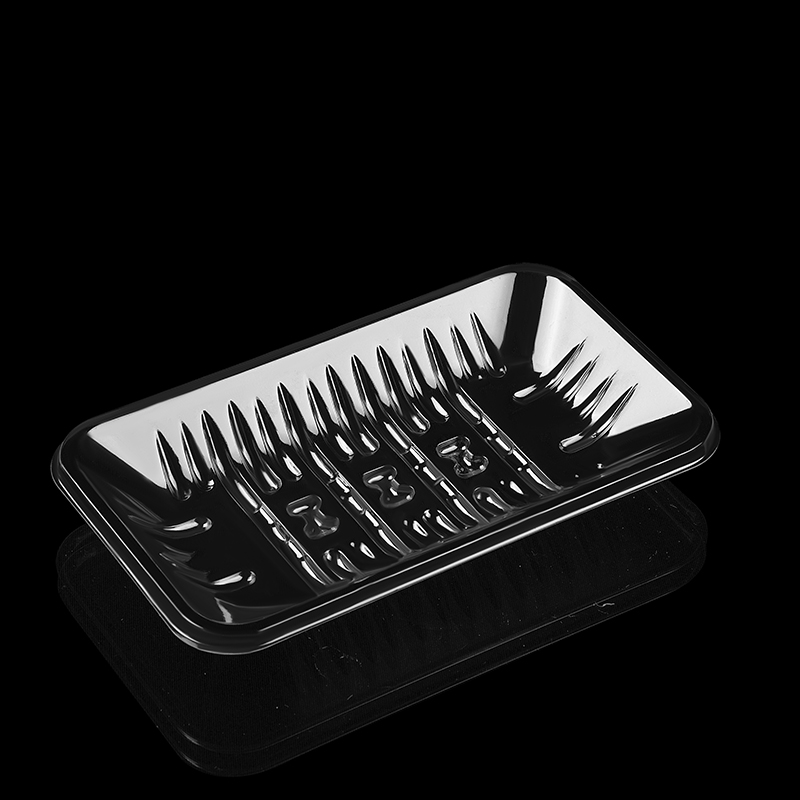
Waste management systems handle these two plastics differently. PET carries the universal #1 resin identification code. PP carries the #5 code. PET enjoys a highly mature, closed-loop recycling infrastructure globally. Municipalities easily sort and process it. The post-consumer recycled (rPET) market thrives. Brands easily source food-grade rPET to meet sustainability goals. PP recycling infrastructure remains less developed. While PP is highly recyclable chemically, the collection and sorting network lags behind PET. Food-grade recycled PP (rPP) remains somewhat scarce.
Environmental costs extend beyond end-of-life recycling. You must evaluate the energy required for production. PP generally requires less energy to polymerize and process. Its lower melting point saves electricity during thermoforming. Additionally, PP has a lower density than PET. You use less plastic by weight to create a container of identical volume. This lightweighting aspect significantly reduces shipping emissions across your supply chain.
Corporate sustainability mandates force difficult packaging choices. You must align material selection with specific ESG goals. If your brand prioritizes circular economy metrics and recycled content, PET offers an easier path. You can confidently claim high percentages of post-consumer recycled material. If your brand focuses strictly on carbon footprint reduction and source reduction, PP becomes highly attractive. Its lightweight nature minimizes greenhouse gas emissions during transportation.
Engineering realities heavily dictate production constraints. Shrinkage rates vary wildly between these two polymers. PET shrinks predictably and minimally (usually around 0.2% to 0.6%) as it cools. Tooling design remains straightforward. PP presents a significant engineering challenge. It has a higher and less predictable shrink rate (often 1.5% to 2.0%). The shrinkage often occurs unevenly depending on flow direction. This drastically impacts mold design. You cannot run PP efficiently in a tool originally cut for PET.
Surface energy determines how well inks and adhesive films bond to plastics. We measure this in dynes. PET naturally exhibits high surface energy. Labels adhere aggressively, and top-sealing films bond reliably without extra steps. PP possesses low surface energy. It essentially repels adhesives and inks in its natural state. You must apply secondary treatments. Rigid PP formats and films require corona treatment or flame treatment prior to printing or top-sealing. This adds an extra step to your manufacturing process.
Selecting the right plastic requires a systematic approach. Follow these structured steps to evaluate your application requirements.
Step 1: Define the Thermal Journey: Track your food from the filling line to the consumer's plate. Does the product require hot-filling at the factory? Will the consumer microwave it in the primary package? Does it endure deep freezing? If you answer yes to hot-filling or microwaving, you must choose PP.
Step 2: Assess Visual Requirements: Evaluate your retail environment. Does your product rely entirely on visual appeal to sell? Do consumers demand to see the exact color and texture of the baked goods or fresh berries? If crystal-clear visibility acts as a dealbreaker, you must choose PET.
Step 3: Map the Supply Chain & Shelf Life: Calculate your required expiration dates. Evaluate oxygen and moisture barrier needs. Highly sensitive foods requiring long ambient shelf lives benefit from PET. It generally offers a much better oxygen barrier than standard PP.
Step 4: Request Samples: Never buy tooling based on datasheets alone. Advise your procurement team to order physical prototypes. Test these containers under actual filling and transit conditions. Perform drop tests at your intended storage temperatures.
The debate between these two dominant plastics is rarely about one being universally superior. The correct choice depends entirely on aligning material properties with your specific product lifecycle. High heat demands Polypropylene. Glass-like clarity demands Polyethylene Terephthalate. By evaluating your thermal journey, barrier requirements, and brand sustainability goals, you can secure packaging that protects your product and your bottom line.
Map your temperature extremes immediately to eliminate unsuitable materials early in the design phase.
Prioritize PET only if retail visibility and strict oxygen barriers are non-negotiable for shelf life.
Audit your local recycling regulations to ensure your ESG claims match realistic end-of-life processing.
Consult with packaging engineers to run physical transit tests before committing to expensive steel tooling.
A: PP is far better for microwavable applications. Polypropylene features a highly stable semi-crystalline structure with a high melting point. It easily withstands microwave temperatures up to 220°F (104°C) without warping. PET softens and distorts around 160°F (71°C), making it unsafe for microwave use.
A: Yes, both materials are inherently safe for direct food contact. However, safety depends entirely on the specific manufacturing run. They are only 100% food safe if the manufacturer uses certified food-grade resins and non-toxic additives. Always request compliance documentation like FDA or EFSA certificates.
A: Cost-effectiveness fluctuates based on your specific priorities. PP features a lower specific gravity, yielding more containers per pound of raw resin. This often lowers the per-part material cost. However, PP requires highly specific, often more expensive tooling due to high shrinkage rates. PET tooling is generally simpler.
A: No. Standard PP possesses an inherent haze due to its crystalline molecular structure. It scatters light and appears slightly milky or cloudy. PET delivers a glass-like, ultra-transparent finish. If your marketing strategy relies on pristine product visibility, PET remains the superior visual choice.


